

By Kurt Dusterberg
For the past couple of decades, youth sports have been evolving into something almost unrecognizable.
Previous generations of kids learned the basics of their sport in a low-stress environment on local rec fields. And while that environment still exists, it’s often just a brief introduction to the all-in atmosphere of travel sports. Not only has travel taken over every team sport on the youth landscape, but specialized training has upped the ante.
Dan Gill has coached softball for more than 15 years. After several years as head coach at Apex Friendship High School, he is now an assistant at Seaforth High School in Pittsboro. Just in the past few years, he has seen his sport accelerate the learning curve.
“For just about anyone looking to compete at a higher level of high school softball, it’s going to be really rare for you to walk in, even playing travel ball, if you’re not doing the additional private instruction as well,” he says.
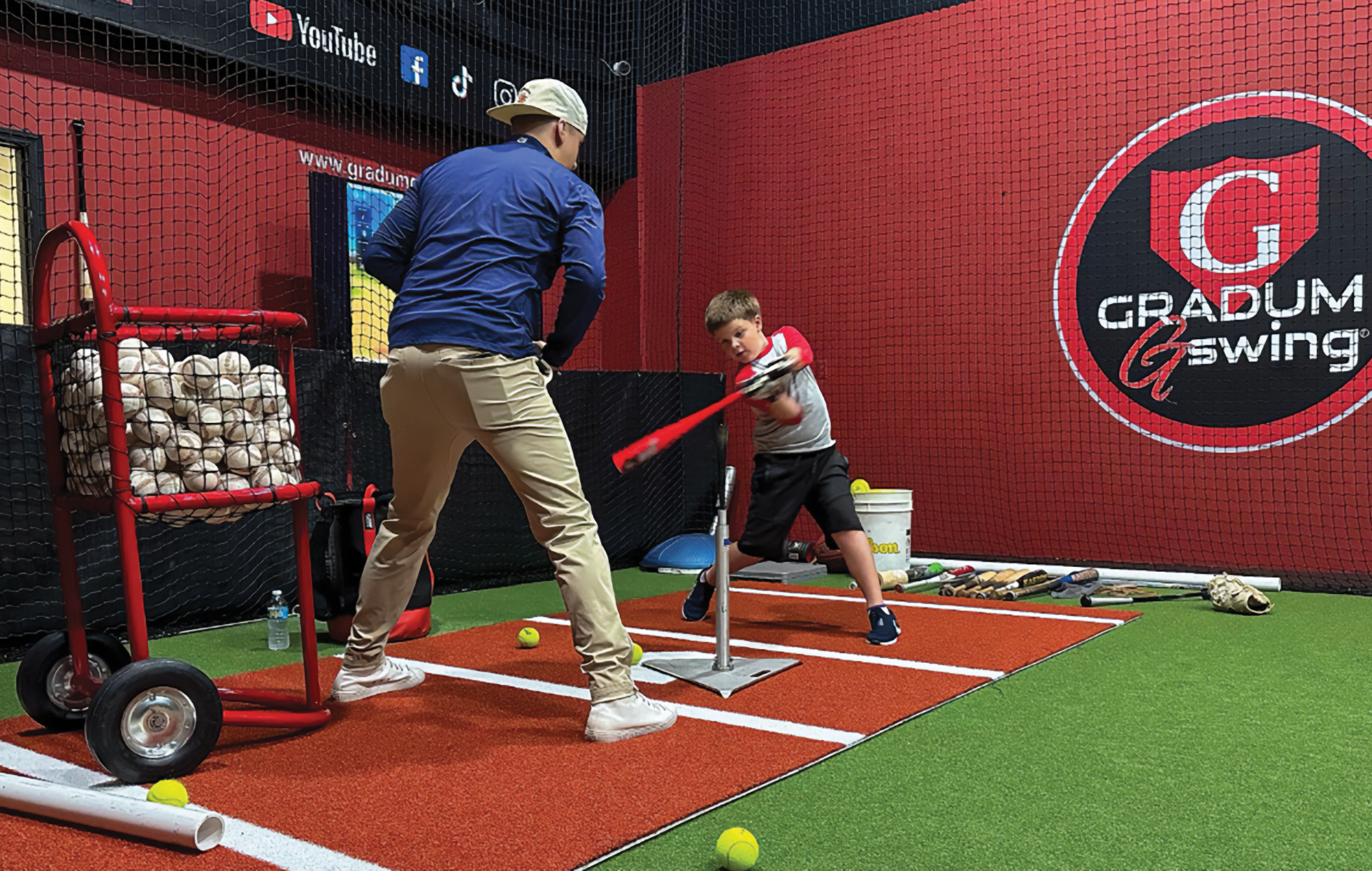
The increased focus on individual teaching is evident in all youth sports. To accommodate the demand, instructional businesses are popping up in every community. Gradum Gswing offers baseball and softball hitting instruction across the country, including locations in Cary and Wake Forest.
“Whether it’s a baseball swing or a softball swing, it’s so technical,” says owner Carlos Garmendia. “The high school team has one or two coaches that are allocated to varsity and JV. There isn’t that one-on-one instruction. For something so technical, there isn’t a place in the team setting where you’re getting that instruction, let alone the technology.”
While the availability of personal instruction has made it easier for young athletes to excel in a particular sport, there is a downside. Even 10 years ago, travel sports—with their costs and high-level competition—seemed to be the leg up kids needed to become a viable high school athlete. But adding another layer of commitment will force kids to decide how much effort they want to devote to the games they enjoy.
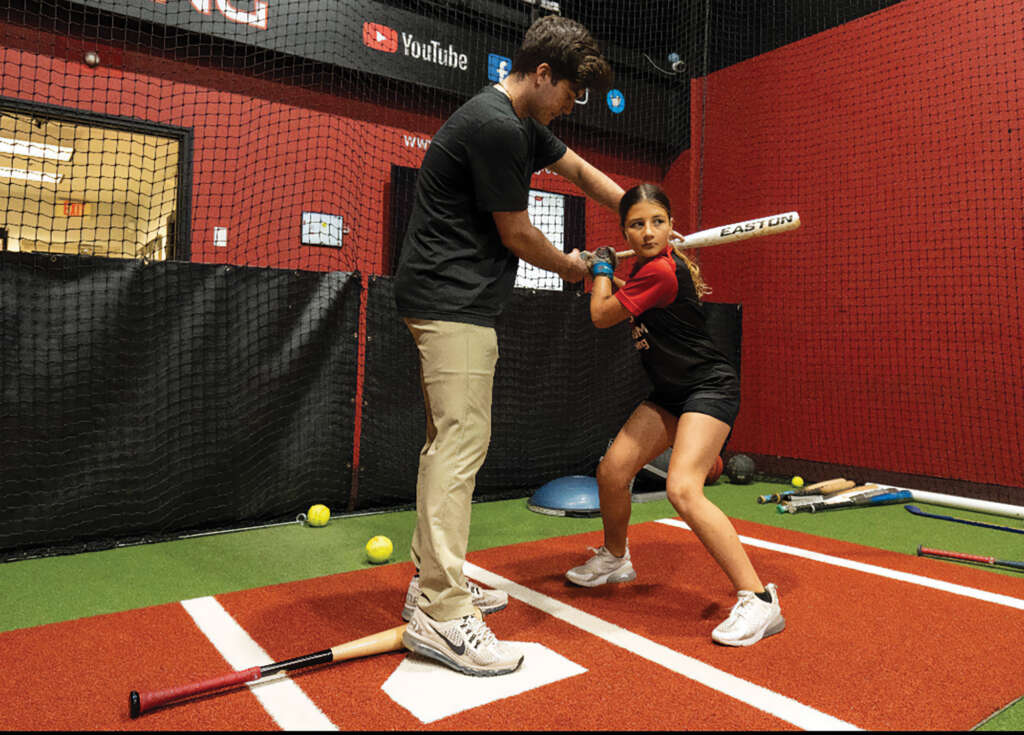
“I think you would find out that 80 or 90 percent of the kids are in private instruction,” Gill says. “Nearly every travel team is assuming you will not only spend the money for the travel team, but you will be doing outside private instruction as well, whether it’s pitching and hitting, or strength, conditioning and speed.”
For the young players who are willing to pour more into their playing careers, the payoff shows up in performance. For example, as pitchers improve with private instruction, hitters must counter that with a focus on finer details to stay competitive. As Garmendia says, “How do I hit the inside fastball? How do I hit the slider away? If the hitter is never taught, they don’t have success and they think they’re not a good player.”
At the forefront of all the new baseball and softball training is technology. Assessment for hitters is data-driven, measuring metrics like exit velocity, launch angle, bat speed, and spin rate for ball flight. “For the younger kids, with the technology we have, they’re able to make adjustments much faster,” says Garmendia, who played collegiate baseball and was drafted by the Milwaukee Brewers. “I graduated high school in 2012. We didn’t have anything to measure the exit velocity.”
If all the expectations sound a bit unrealistic, it’s worth remembering that athletes can shape their own growth as they improve their skills. Hard work, self-correction, and repetitions play a critical role in reaching athletic goals.
“Some of these private instructors are very talented and have a way of connecting with the kids,” says Gill. “You need some instruction and you need some technology, that’s great. But there is hardly a substitute for taking swings and squaring up balls. If you’re an athlete, you’re going to figure out how to make better contact.”
Garmendia agrees that young athletes—and their parents—should think carefully about how to commit time and resources. “We need to play and experience game theory to know how to play the game,” he says, “but instead of all these tournaments, why don’t we practice more than we’re playing the game?”
And even if the pursuit of a college scholarship makes all the opportunities seem worthwhile, remember that roughly one percent of high school athletes ever earn an athletic scholarship. Each year on the softball field, Gill is reminded that expectations for a young athlete can be fragile.
“Every freshman who plays for me, they have the dream that they’re going to play in college, 100 percent of them,” he says. “The kids who are maybe on the bubble get overwhelmed by it and decide they just don’t want to commit this much to it.”
Baseball and softball instruction facilities in the Triangle:
Baseball Rebellion, Raleigh, baseball-rebellion.com
8ctane Baseball, Raleigh, 8ctanebaseball.com
Diamond & Aces Sports Center, Morrisville, diamondandaces.com
SixFour3 Softball, Wake Forest, sixfour3.com