

By Dolly R. Sickles
I’ve been a lap swimmer for three decades and still swim a mile three or four times a week, but it never occurred to me to take up lifeguarding. That was until a couple of years ago, when Christine Novak, a terrific guard at the Ingram Family YMCA in Sanford, wore me down.
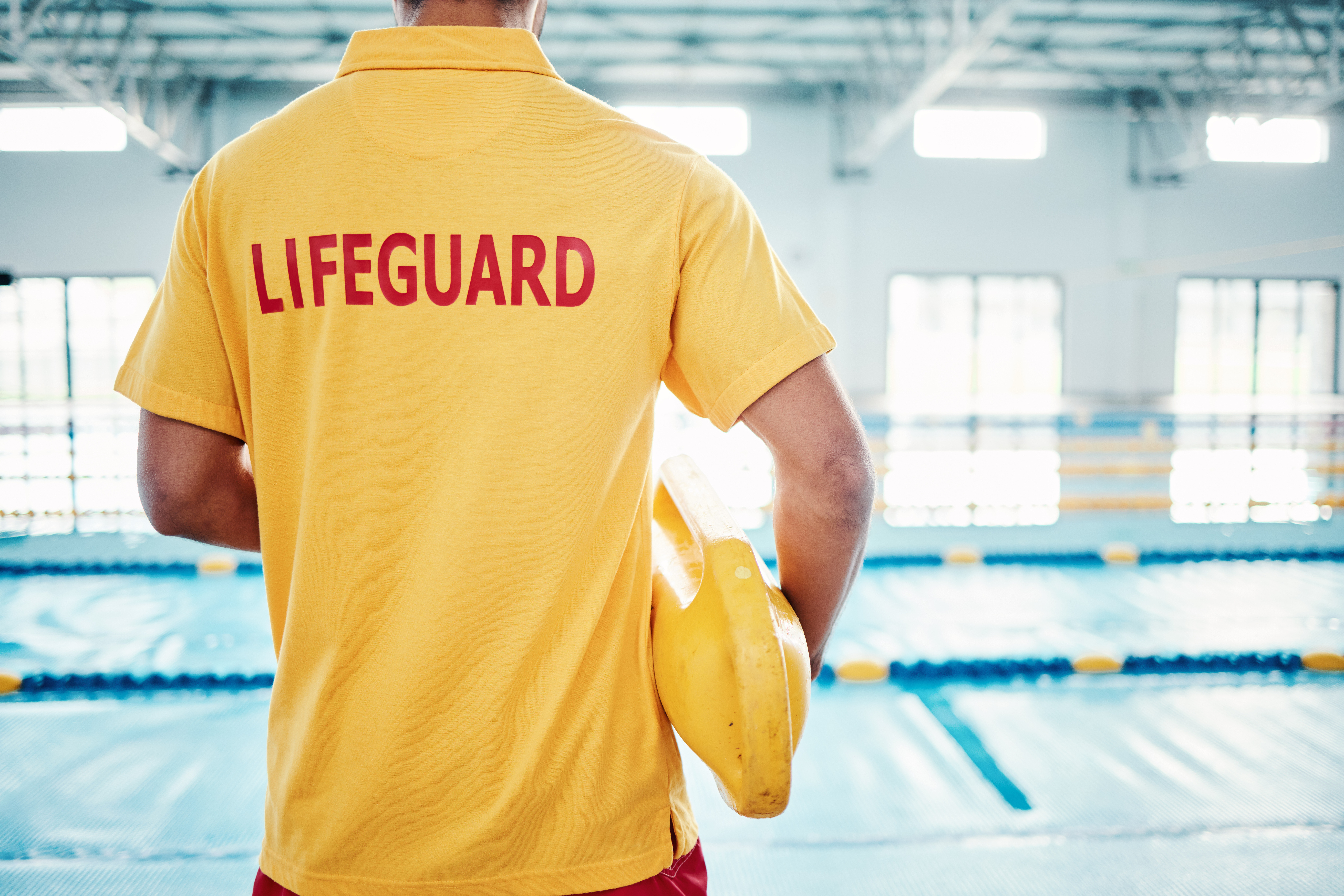
There’s a national lifeguard shortage, which means that your local pool this summer is likely to have shortened hours because there are simply not enough trained professional lifeguards to go around.
Which is how, at this point in my life (early 50s), I find myself working as a part-time lifeguard and lifeguarding instructor with YMCA of the Triangle (YOTA). And because my husband Matt is the best partner, it’s how he (also in his early 50s) finds himself a part-time lifeguard, lifeguarding instructor, and certified pool operator (CPO).
Lifeguard certification for YOTA occurs through the American Red Cross (ARC). I can attest to the rigorous training and certification process, in which I hold certifications in deep water lifeguarding, blood loss, oxygen, and AED. In short, I can swim a mile, jump in and pull a passive drowning person from ten feet of water, swim them to the side, work in tandem to get them on a backboard and out of the water, and then perform CPR until the EMTs arrive. Who knew?
Lifeguarding is for Everybody
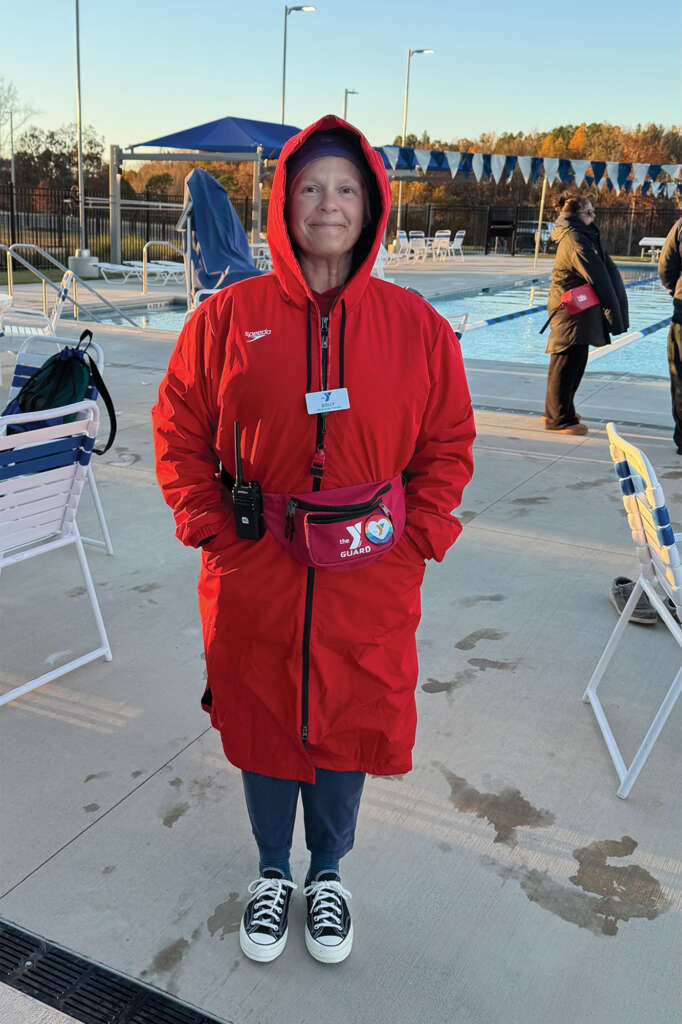
On the one hand, it seems like lifeguarding is a young person’s game. Most people visualize teenagers taking the stand, donning their aviators, and twirling a whistle around their finger. But this is a new era in safety and accountability, and professional lifeguards come in all shapes, sizes, genders, cultures, and ages.
At the Chatham Park YMCA in Pittsboro, where I put in most of my hours, 33 guards will return for the summer and half a dozen of us are over 40. We’re a hearty bunch at Chatham County’s only Y facility, because we operate our outdoor-only pool with no bubble or retractable DynaDome. We keep the water a balmy 82 degrees and open during the day as long as it’s over 35 degrees. There’s camaraderie in the cold, between the guards and with the swimmers.
Max Turner, Director of Aquatics for Ingram and Chatham Park YMCA, says of the adult guards he manages, “I believe there’s value in training and hiring adult lifeguards, ages 30 and over. From a practical perspective, we need folks with a schedule that isn’t aligned with a typical school schedule. I have no problem staffing high school guards after 4 p.m., but any weekday hours before that require adults without a typical nine-to-five or college schedule.”
The guards on rotation with me in the offseason—meaning, not summertime—range in age from high school (16 or 17) to late 60s (and maybe beyond). Some are retired; some, like me, can flex their time. I work with one paramedic in Wake County, and my husband is an executive strategist at CDW and volunteer NREMT and firefighter with the Silk Hope Volunteer Fire Department in Chatham. We’ve got a high school guidance counselor and three retirees from varied, interesting backgrounds. One of those retirees also volunteers with Chatham Chuckwagon, and another is part of a surf rock band.
An Opportunity to Be Extraordinary
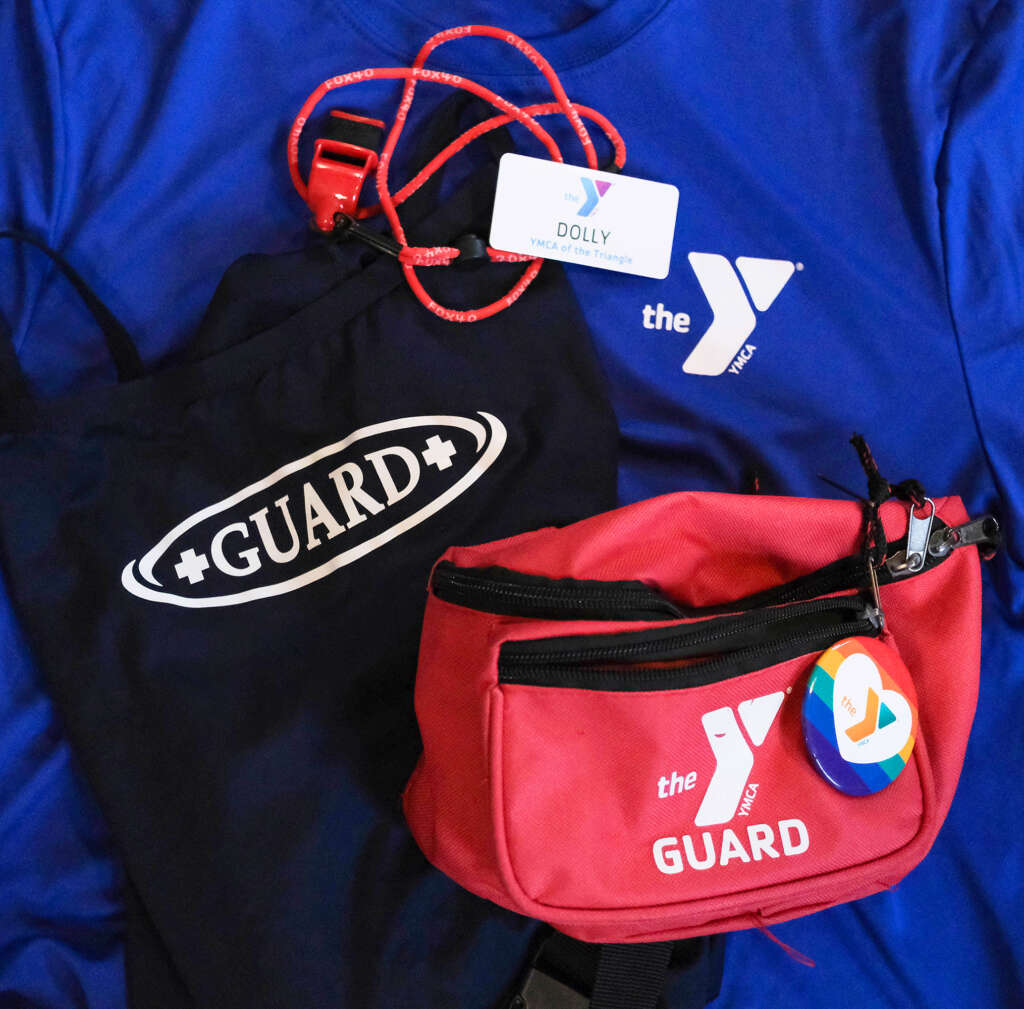
Jennifer Nelson, senior vice president of marketing and communications for YOTA, confirms that “at this time we have about 400 lifeguards across the association,” who ensure the safety for thousands of swimmers in nearly 20 pools and aquatic programs like Safety Around Water, Camp Excel, and YOTA summer swim teams. YOTA has been around since 1857 and continues its effort to “strengthen people and communities by turning ordinary moments into extraordinary experiences.”
Lifeguarding is fun and it’s nice to be outdoors and active, but it’s also a very serious responsibility to keep swimmers safe. Always in the back of our minds is the fact that we have less than three minutes to reach and remove a drowning person—and ideally we need to have them out of the water and be actively performing CPR within the first 60 seconds.
Prevention is the best safety protocol, but sometimes emergencies happen in the water. As a writer, I’m an observer of people by nature. Through my career, I’ve worked with lots of folks who started at the Y as teenagers and evolved into remarkable people. Now I’m working with dozens of young people and have an insider’s view of where that development begins. “One of the best things younger guards get out of working with older guards is an example of work ethic and professional skills,” Turner says. “For many, this is a first job, and a positive role model can go a long way. Senior guards lead with life experience that has shown that doing the ‘little things’ correctly every time matters in an emergency situation. Older guards bring to the table a positive attitude and a spirit that adapts well to dynamic situations. It’s great to work with people who want to be here serving their community.”
It’s never too late to learn new life skills, and you’re never too old to try something new. Don’t just think outside the box … Work outside the box.”