


By Kurt Dusterberg
Every year, high school students are confronted with the challenges of preparing for the future. For those with plans to attend college, part of the process is standardized testing—taking the SAT or ACT. In some cases, scoring well on the test can be the difference between acceptance at a student’s number one choice or settling for a safety school.
But the role of standardized testing has changed in recent years. According to fairtest.org, more than 80% of four-year colleges didn’t require SAT or ACT scores to be submitted in fall 2025.
Of course, that doesn’t mean scores are not considered in the application process. That’s why prep classes, tutoring, and other resources remain a popular option for college-bound students.
Online resources like Khan Academy offer free comprehensive lessons, exercises, and practice tests. But for students who are accustomed to learning in a classroom setting, in-person instruction remains a popular choice.
Wake Technical Community College offers a six-week SAT class that meets once a week for $325. The class reviews content and teaches test-taking strategies in a setting of 6–12 students prepping for the exam.
“It’s a six-Saturday commitment,” says instructor Debbie Cunningham, a certified K–12 teacher who has taught prep classes for three years. “We take the modified diagnostic of the SAT at the beginning, so from there, we’re able to give them a score. We do a data analysis and ask, ‘What is the score you want to get? Where are we at? What’s an area where we can improve in six weeks?’”

The majority of SAT test questions have multiple-choice answers, so a lot of the instruction focuses on how to determine the correct answers. “You go through eliminating what is wrong,” Cunningham says. “Particularly in math, they can get a higher score using the plug-in strategy—if they know the equation, [they can plug the answer] in to see if it’s correct.”
The SAT is now administered in a digital format, but the test is still taken with a proctor. The length of the exam has also been reduced from three hours to two hours. Those adjustments might help ease students’ concerns, but the classes also play a role in making test day go smoothly. In each of the prep classes, students tackle close to 50 questions.
“It’s a lot of reflection, understanding their strengths and weaknesses in answering the questions, as well as saying, ‘If we get stuck, what are we going to do?’ It’s not so much, if you get stuck, let’s choose ‘C.’ But why did you choose your answer, and what was your reasoning behind that?”
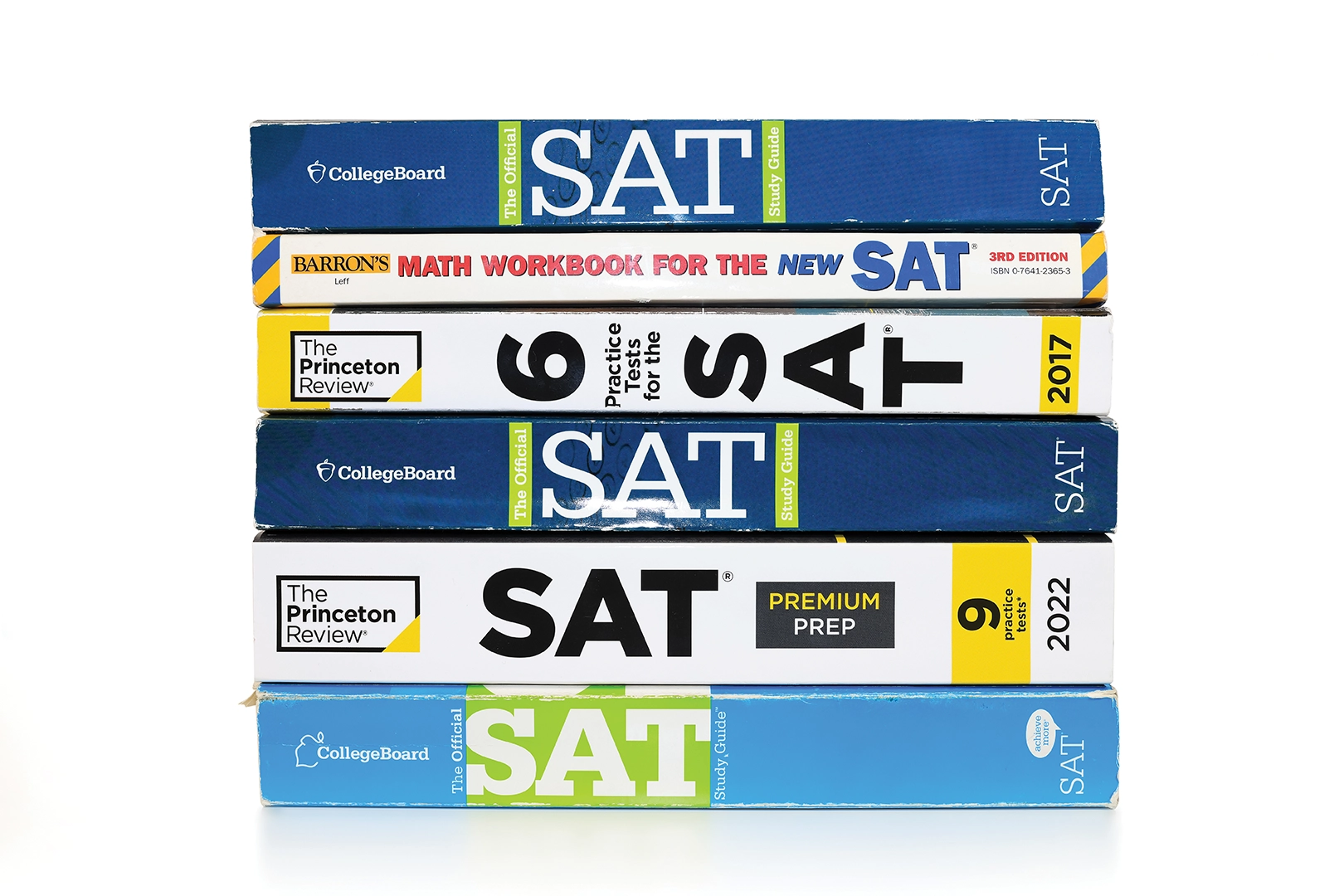
Aside from in-person classes, there are plenty of other resources. Wake Tech uses The Princeton Review’s test books, which include multiple tests for both the reading and writing section and the math section. Collegeboard.org offers The Official SAT Study Guide, which includes seven SAT practice tests. The site also has a popular “SAT Question of the Day” feature, available on the website or app.
Regardless of how parents and students approach the topic, it’s important to be realistic when preparing for standardized tests. The coveted perfect score of 1600 shouldn’t necessarily be every student’s goal.
“The [college] program or the major you’re going into should also influence why you’re shooting for a certain score,” Cunningham says. “A lot of people who get a 1600 are focusing on it like it’s their job.”