


| By Dolly Sickles |
For some folks, winter is a cozy season. Colder temperatures encourage layered clothing and snuggly evenings by the fireplace. Sound carries farther, the dew point’s lower, and the stars are brighter. But others struggle through the longer nights, the biting winds, and the wet, muted landscape. Just like us, pets can also experience the side effects of seasonal changes. There’s no need to despair, however, because with a little planning, easy tweaks in your routine, and some fun ingenuity, you can alleviate your furry friend’s seasonal sadness.
Michael O’Donnell, a Raleigh native and co-owner of All-Star Dog Training with his wife, Melissa, recommends a holistic approach to canine wellness. “People tend to be a little depressed when they can’t get outside, or it’s too cold and cloudy,” he says. “I think they only understand how to work their dog physically, and their dogs suffer because of it.”
Focus on Engagement, Mental Activity, and Physical Activity
Most people know how to get physical activity. Take your dog on a walk, play fetch, throw a frisbee. Those are the easy ones, especially when the weather is nice outside. But in unpleasant conditions or when it’s dark at the end of a workday, it’s difficult to get out for a walk. “If you can add mental exercises for days when you can’t get out for a long walk, you’ll provide so much enrichment for your dogs,” says O’Donnell. “I’m big on teaching people how to mentally work their dog.”
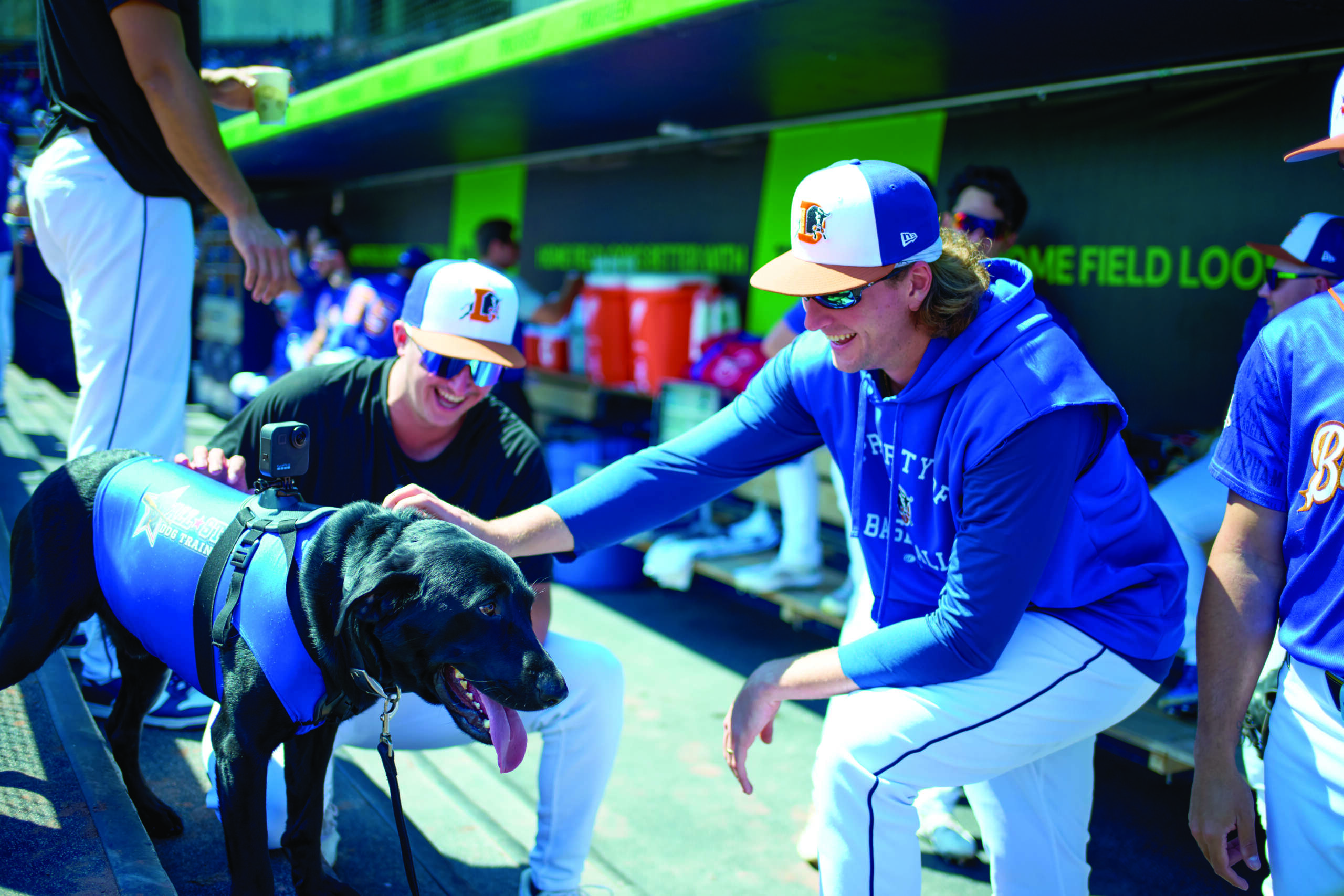
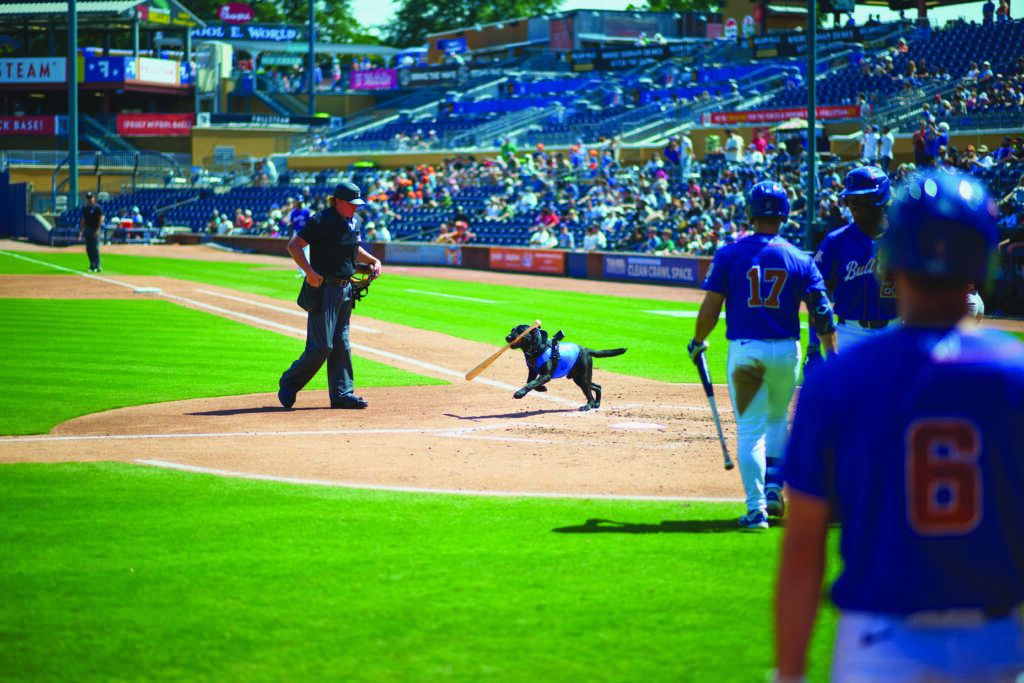
O’Donnell speaks from experience. His dog, Ripken, was the official bat dog of the Durham Bulls and the official kicking tee retriever for North Carolina State University’s football team. After Ripken’s passing in January, his brother Champ took over the role. At two, Champ is thriving in the spotlight in front of thousands of fans in the stadiums. It’s incumbent upon O’Donnell to make sure Champ is engaged when he’s working, and that means really focusing on his mental activity.
Owners are crucial to the training process. “The first lesson I teach is engagement,” he says. “If you can’t get that right, I don’t move on, because you can’t train without the dog looking at you.”
Once you master engagement, O’Donnell recommends giving your dog a job. “Do your homework with your dog. Have fun,” he says. “They need to be worked with and played with. They need the engagement, the mental activity, the physical activity.” For example, have them work on skills like sitting while you make dinner. Start with short spans of time, and work your way up to 15 or 20 minutes before you release them. Challenge your dog to ignore your kids’ toys on the ground. Or, as Michael likes to do, dump out all the dog toys on the floor and train your dogs to put them back into a basket. Above all, work their minds and keep them busy.
Stay Active
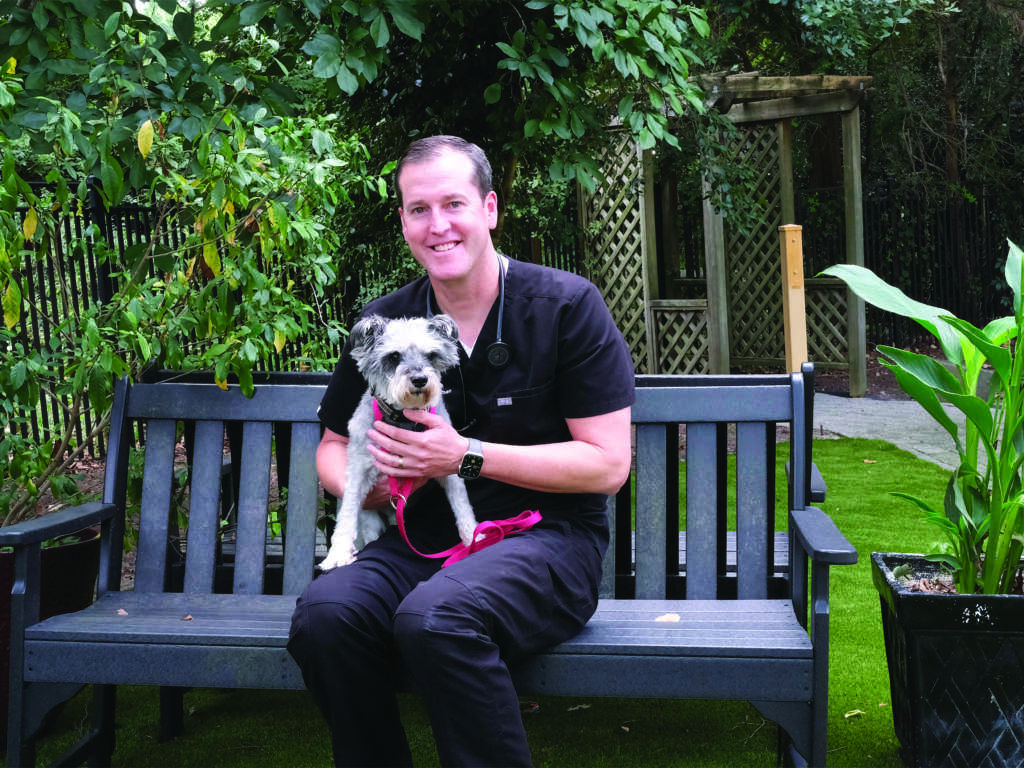
Dr. Matthew Merriman joined Town and Country Veterinary Hospital in 2006 when he moved to Wake County with his wife, Dr. Julie Merriman. They have two children, one dog, and one cat. He’s a friendly practitioner with an approachable personality, and can calm both his four-legged patients and their two-legged people. His practical approach to the care and feeding of pets is what makes him so relatable.
“The biggest thing I tell people in the winter is keep walking your dog,” says Dr. Merriman. “Stay active. In the winter, if you can, you want to walk when the sun’s up. With your senior pets, that’s the best thing you can do with their health.” And as long as you and your pooch are fine getting wet, he thinks a 30-minute walk in the rain is just fine, even in colder temperatures. Here in North Carolina we may not see weather extremes cold enough to cause hypothermia, but it’s good to know what the signs are: “Look for extremities—primarily toes—to be icy to the touch and potentially blue.”
Melting ice and snow and heavy rainfall can make for mucky trails and grassy areas, so keep your pets comfortable by walking them in drier areas of roads and trails. We salt the roads here, and while Dr. Merriman doesn’t see many problems with deicers, it’s a good idea to wash your dog’s feet after a walk if they have any cuts or abrasions where the chemical could get in and make them uncomfortable.
If you’re walking after dark or before sunrise, stay visible with reflective leashes and harnesses, or lights that strobe. Or consider a head lamp. “They’re great—they’re cheap, and help you do stuff like pick up the poop,” says Dr. Merriman.
Ultimately, keeping your pet happy and healthy this winter is about finding a thoughtful balance. It’s about turning a dreary, wet afternoon into an opportunity for mental enrichment and embracing a crisp, sunny walk as a cherished routine. These moments of focused engagement—whether teaching them to put away their toys or simply enjoying the brighter stars on a cold, clear night—do more than just prevent boredom. They strengthen the bond you share, transforming the season of long nights into a time of connection and ensuring you both emerge from the colder months feeling refreshed and ready for spring.