
Skip to content Skip to sidebar Skip to footer

100 Years of Hands-On Learning: John C. Campbell Folk School

| By Page Leggett |

Going to the John C. Campbell Folk School (JCCFS) is like going to a grown-up sleepaway camp. That is, if you were the kind of kid more likely to sign up for arts and crafts than archery.

And I was.

While visiting friends in Murphy—North Carolina’s westernmost town—I went to the Folk School’s wondrous craft shop. I was enchanted by the idyllic campus in tiny Brasstown (population 777) and knew I had to return as a student.

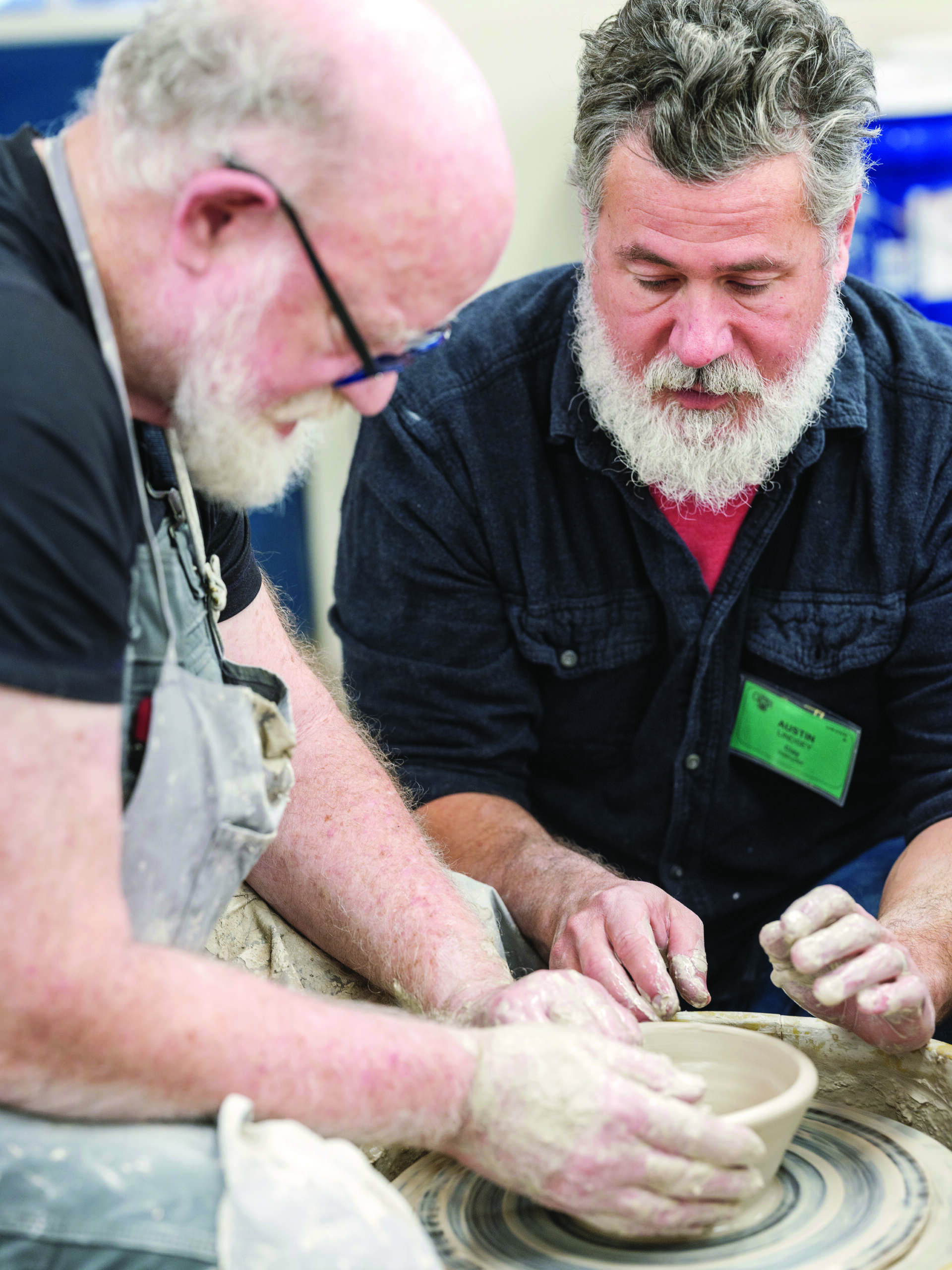
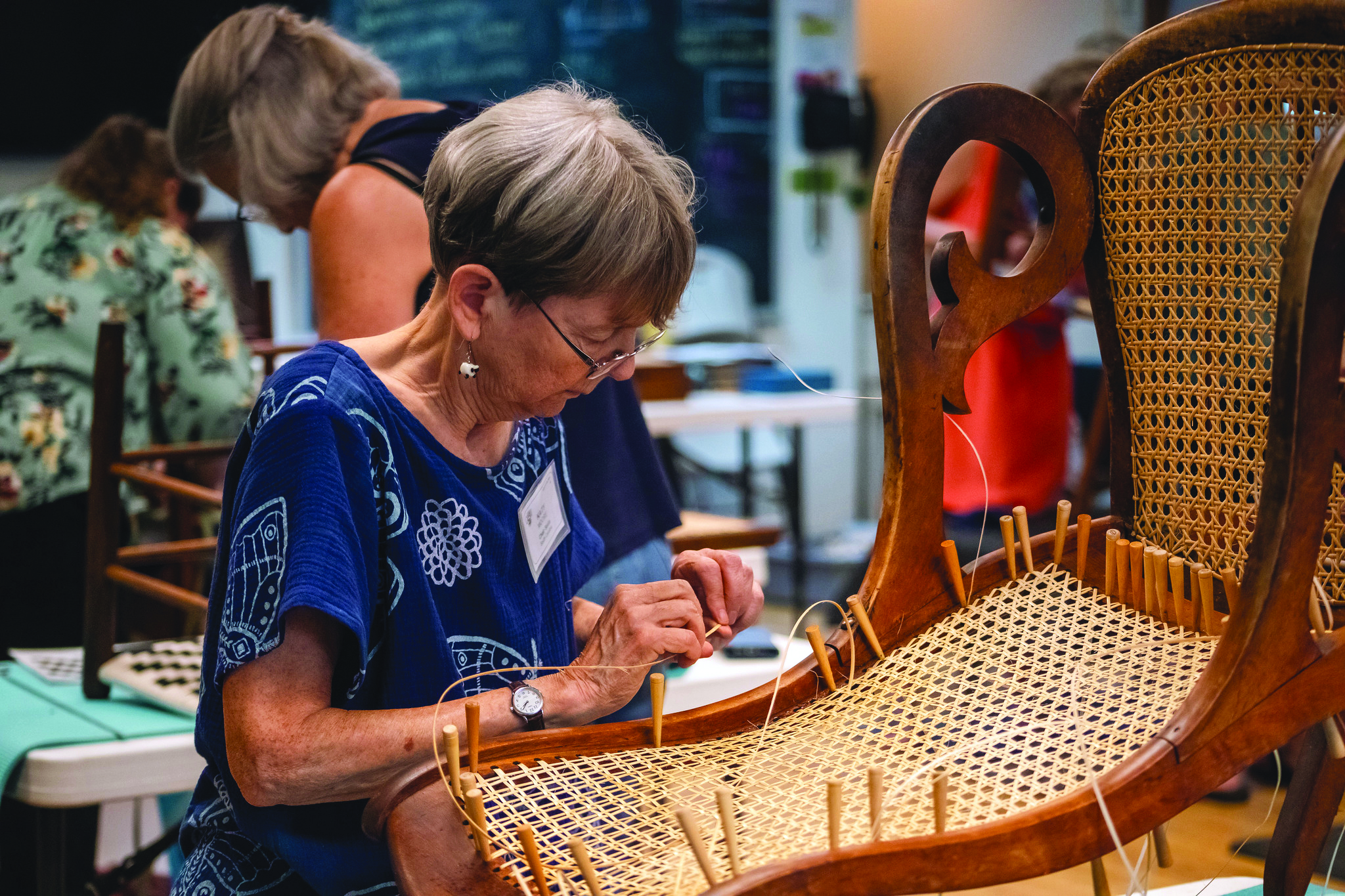
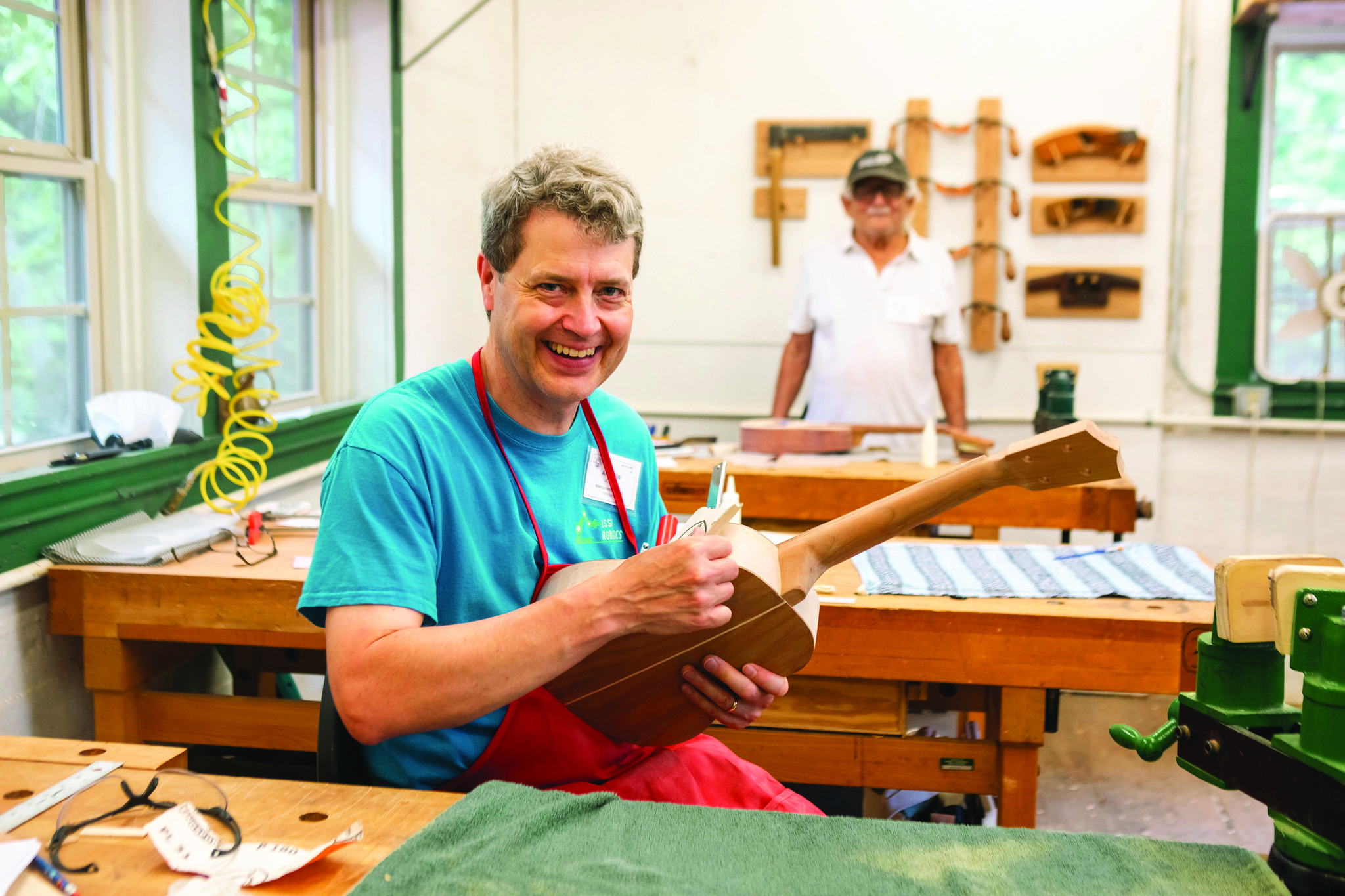
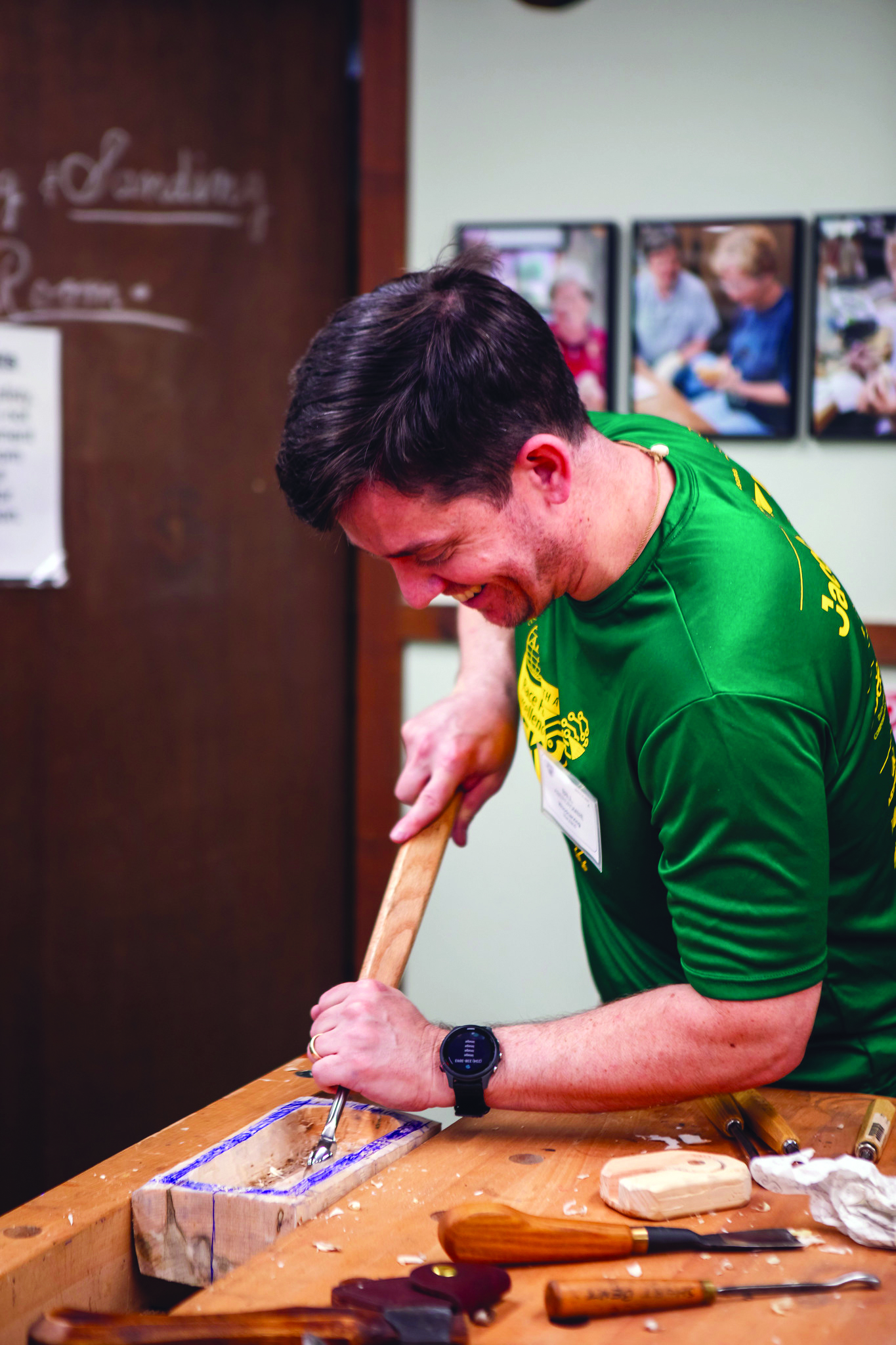
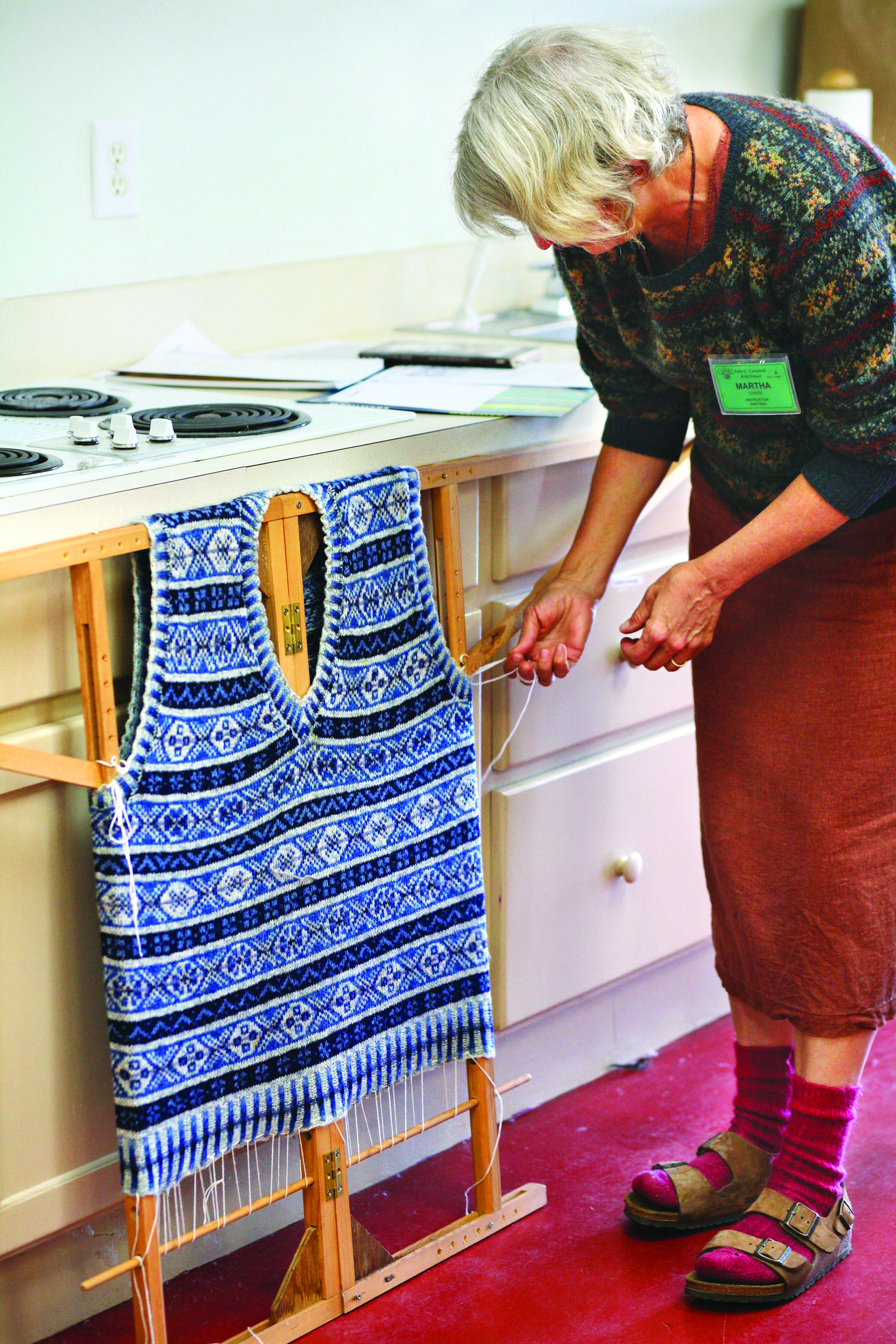
For the past 100 years, JCCFS has welcomed adults who come, for a week or a weekend, to unplug and learn a new craft or hone their skill at one they already practice. Classes cover everything from blacksmithing to broom-making and painting to puppetry.

Folk schools, which originated in 1830s Denmark, are rooted in the belief that “the classical education of the time, with an emphasis on Greek and Latin studies, created a rift between life and learning,” according to Vicky Eiben, Ed.D., writing for the Folk Education Association of America.

These egalitarian schools emphasize hands-on learning in a noncompetitive environment—meaning no grades are given—for traditional crafts. They connect students to their own talents and abilities, and to their broader community.

A Century of Skill Building

John C. Campbell wasn’t a North Carolinian. Or even a Southerner.

He was born in Indiana, raised in Wisconsin, and studied education and theology in New England. In the early 1900s, Southern Appalachia was considered ripe for mission work for a young idealist like Campbell.

So he and his new wife, Olive Dame Campbell, set out in a covered wagon to study mountain life from Georgia to West Virginia. John died before the couple’s shared vision of a folk school could be realized. But Olive made it happen—with help from Brasstown’s sole shopkeeper, Fred O. Scroggs, who galvanized support (locals pledged labor and building materials) and whose family donated their land to the cause.

The school officially opened in 1925. And in some ways, little has changed since then. The mission is the same, and many of the same skills are still taught. While new genres have been added over the years, the school is never going to be cutting-edge. A wide range of photography classes are offered, including drone photography, but executive director Bethany Chaney says, “We’re holding the line at digital art.”

Chaney, a Chapel Hill native, joined the staff in 2022 as deputy director after spending her career in nonprofit management in the Triangle. She was a JCCFS student before she became an administrator. After just one weekend class in pine needle basketry, Chaney was smitten. “Each time I came, the draw of that red door at Keith House was just so strong,” she says. (Keith House is the hub and heart of the campus.) “I loved every minute of my time here as a student. I was finding more and more of my own creative spirit.”

When there was a vacancy at the top, Chaney was officially named interim executive director. In September 2023, she became executive director. She’s leading JCCFS at a pivotal time—its centennial. The yearlong celebration kicked off in October and will include special programming on campus through next fall.

A capital campaign is part of the centennial, and there’s no shortage of ideas on how to use the funds Chaney hopes to raise—a new welcome center, a bigger dining hall, and a coffee shop have all been discussed. The school needs more lodging, too.

Ever-Changing, yet Timeless

Covid changed a lot—even at a place where time seems
to stand still.

“Fewer people are willing to share a room with someone they don’t know,” Chaney says. “We get more requests for single-occupancy housing now.” The many Airbnb and VRBO rentals in the area are another option.

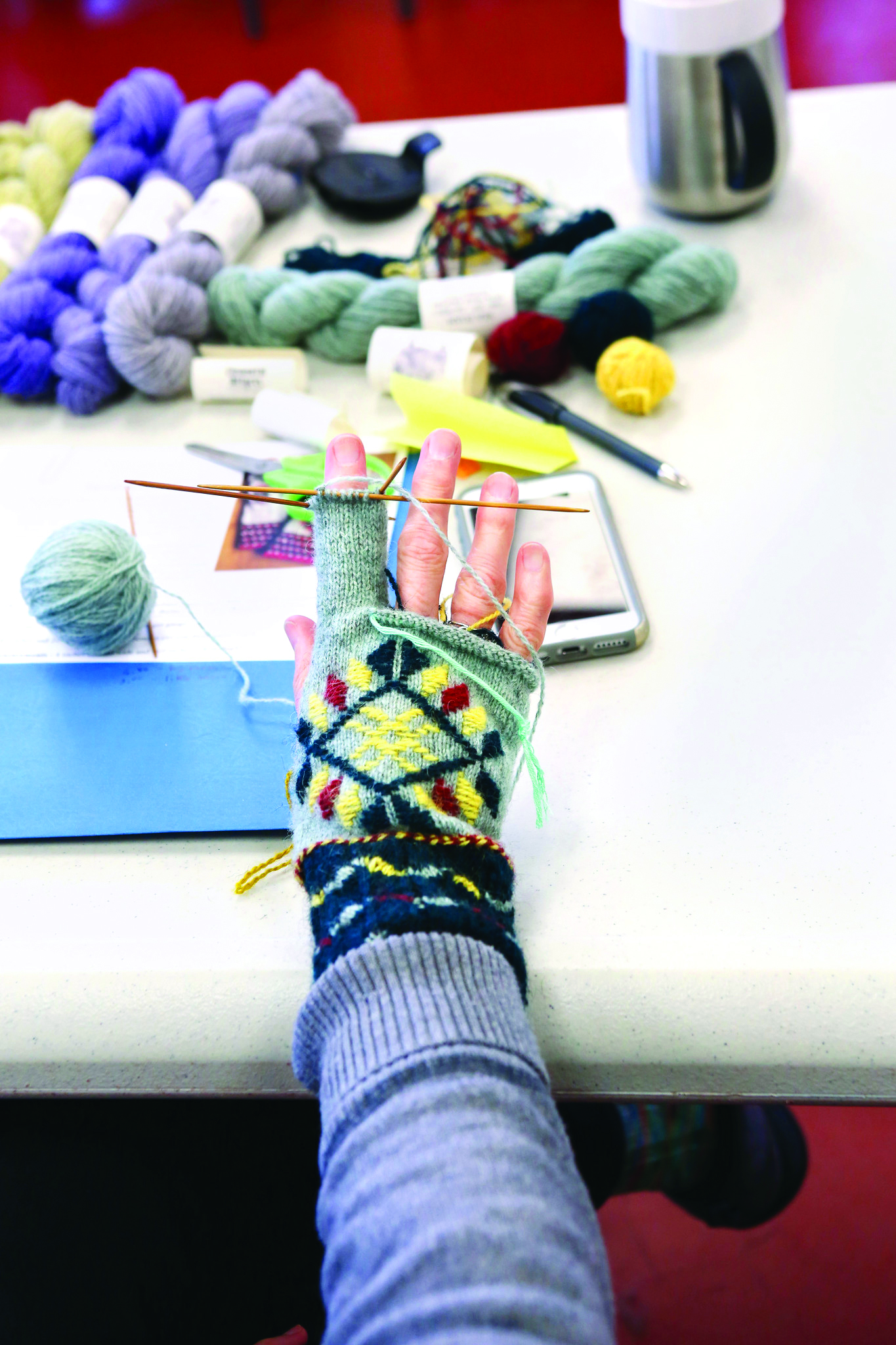
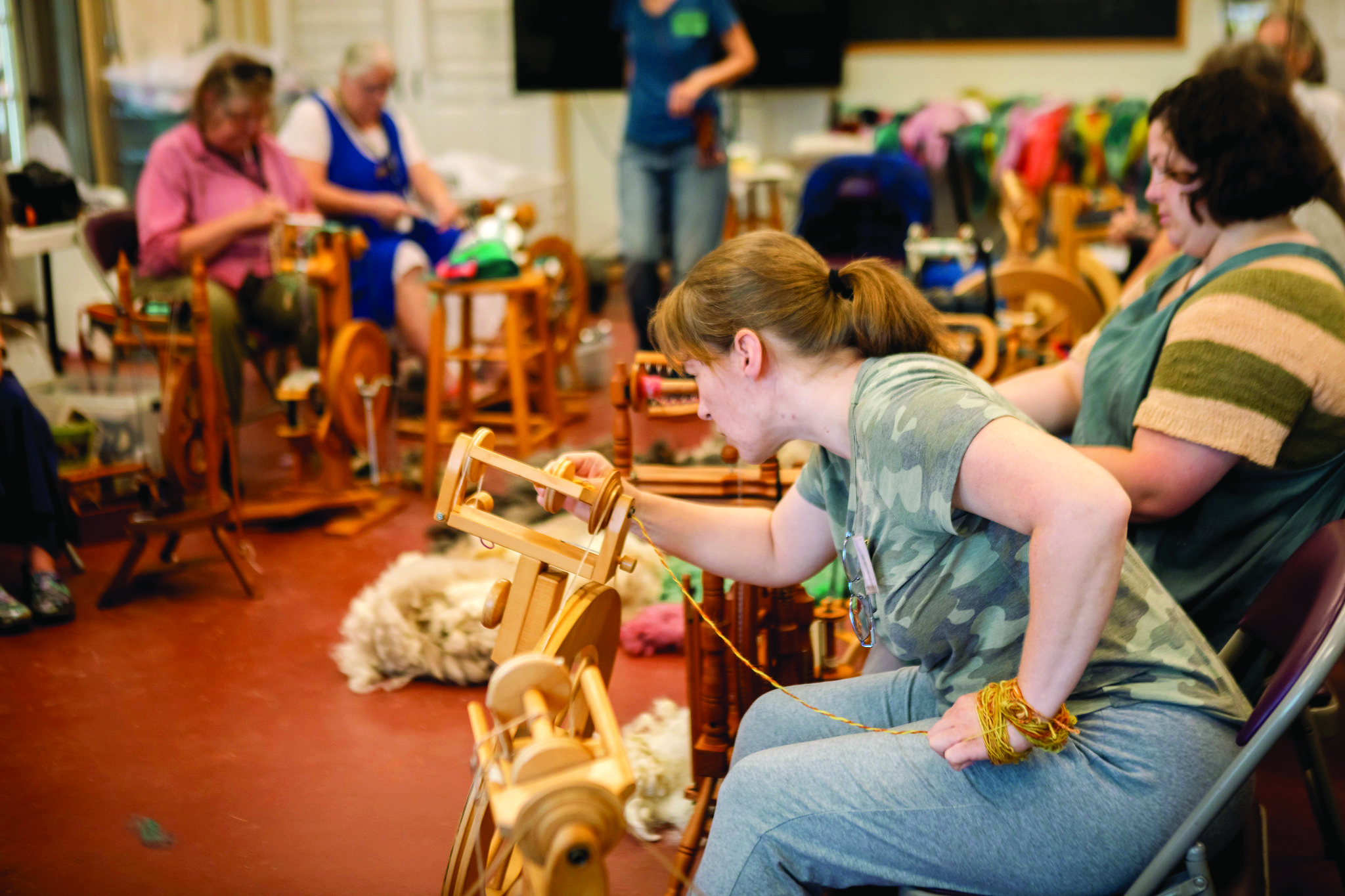
As for classes, people are getting back to the basics, Chaney says. Old-school crafts including basketry, broom making, spinning, knitting, crochet, and bobbin lace (a.k.a. lace made by hand) have soared in popularity. 

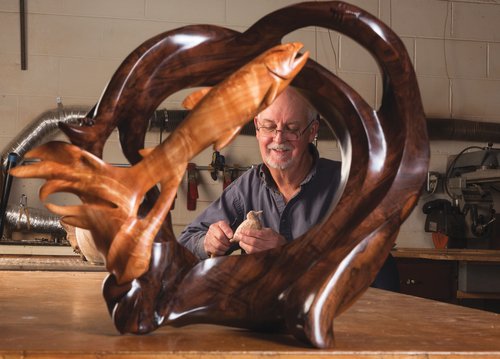
Interest in woodworking has exploded, too. JCCFS is well-prepared. The school has three studios dedicated to it: woodworking, wood turning, and wood carving. And more women are taking classes that had previously been dominated by men, like wood carving and blacksmithing.

The folk school instructors—all experts in their fields—come from all over, and they come for a week or a weekend, just as students do. As many longtime instructors retire, Chaney’s team is making an effort to add more diversity across the age, race, and geography among teachers, with a goal of increasing diversity among students as well. “We’re forging relationships with organizations, individuals, and colleges and universities that have diverse populations,” she says. “And it’s paid off in terms of reaching a maker population that … hasn’t necessarily seen themselves reflected before.”

Eat up

It’s hard to talk about the Appalachian culture without talking about the region’s foodways. And food is a big part of the JCCFS experience.

Meal plans are available. You can eat all three meals a day, or just lunch in the dining hall. There’s a breakfast buffet, and lunch and supper are served family-style. The food isn’t just better than you might expect; it’s downright delicious. And the kitchen is accustomed to accommodating vegans, vegetarians, and those on gluten-free diets.

Menus change seasonally and make use, whenever possible, of vegetables from the on-site garden. People “rave about the meals, thanks to the vision of executive chef Terra Ciotta,” Chaney says. “Homemade desserts constantly rank at the top of the favorite lists.”

The culinary arts are well-represented. Upcoming cooking classes include everything from Italian liqueurs and gelatos to homemade goat cheese; from artisan ales to gluten-free baking; and from fruit-based desserts to food truck favorites.

The hardest part of studying the voluminous class listing is deciding what to take.

Joy and Wonder

I did return to JCCFS as a student.

I spent a magical week in 2013 with other would-be memoirists under the tutelage of the late Dr. Vickie Hunt, an English professor from Florida who told us at our first meeting that we were going to “have to walk right up to the wreck and examine it.”

Soon enough, I understood what she meant.

On the first full day of class, one student wept while sharing her prose. Hunt congratulated her for being the first and assured us that we all would cry by the end of the week. “And if you don’t,” she said, “you’re skirting something. Because if you’re going to really examine your life, you’re going to shed a few tears.” She was right. Over the course of that week, we all did. 

We were surely the only people shedding tears at the school. Memoir class aside, John C. Campbell is a place of great joy, of self-discovery, of wonder. Learning to make soap (or samosas or scrimshaws) mattered in 1925. And it may matter even more today. There are many places you can learn to code, but very few where you can learn to spin yarn, make felt, or forge a steel skillet.

What a pleasure it is to leave technology behind, commune with nature (and other people), and get in touch with your creative side. Camp shouldn’t be just for kids.

Get schooled. The John C. Campbell Folk School is located at One Folk School Road in Brasstown, North Carolina, about a six-hour drive from Raleigh via I-40. Learn more at folkschool.org.

© 2008-2025 5 West magazine, LLC. All rights reserved. Copyright applies to all pages on this website. | Privacy Policy

Subscribe to
our Magazines

Subscribe to
our Newsletter