Skip to content Skip to sidebar Skip to footer

JC Raulston Arboretum celebrates five decades of diversifying the Southeast landscape

Raleigh’s Living Laboratory

Story by Beverly Hurley | Photos courtesy of JC Raulston Arboretum

What was once Raleigh’s best-kept secret is today recognized as one of the nation’s premier arboretums, with a plant collection unequaled in the Southeast. And it all started when a horticulturist from the wheat fields of Oklahoma came to Raleigh.

J.C. Raulston’s Impact

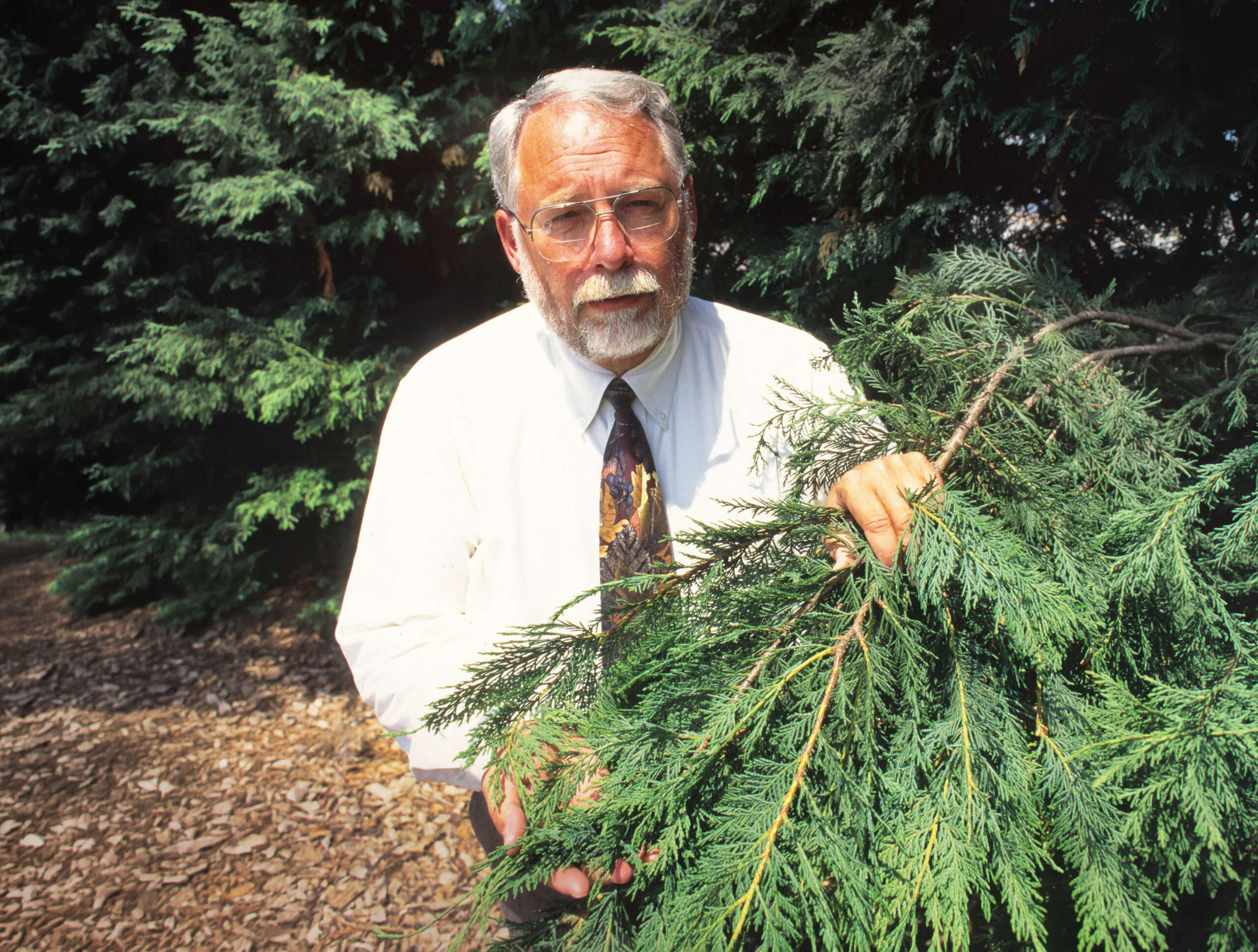
In 1975, a young horticulture professor from Oklahoma, Dr. James Chester Raulston—better known as J.C.—was hired by North Carolina State University to teach and transform an 8-acre plot near the state fairgrounds into an arboretum that would serve the university’s horticulture program. A year later in 1976, he began planting the land with a bold mission: to diversify the types of plants available in the commercial nursery industry. In 1981, the university officially named it the NCSU Arboretum, and J.C. became its first director.

At the time, plant options for gardens and landscapes were limited—nurseries grew only a handful of varieties, leading to a landscape of repetitive choices. But J.C. saw the world of plants larger than that. He tirelessly collected, propagated, and promoted a wide range of woody plants to create a diverse and abundant plant palette. For the next 20 years, J.C. guided and directed university students, faculty, and volunteers to expand the arboretum’s plant collection and share these with the commercial plant industry. His mantra—“Plan and plant for a better world”—was more than a catchphrase; it was a call to action as he traveled the globe to find and evaluate plants suited for the Southeast, then shared his discoveries freely with the commercial plant trade. It’s said that J.C. introduced and promoted more plants in horticulture than anyone else during the late 20th century.

After his tragic death in a car accident in 1996, tributes poured in from peers who described him as a “generous-spirited giant among horticulturists” and a “plant evangelist.” The university honored his legacy by renaming the arboretum the JC Raulston Arboretum (JCRA) in 1997.

Arboretums throughout the world enjoy many of the plants sent to them by J.C., including his signature selections and his well-known favorites. Some of the plants discovered by J.C. are still growing at JCRA today. His Chindo viburnum (Viburnum awabuki ‘Chindo’) and ‘Emerald Pagoda’ Japanese snowbell (Styrax japonicus) can be seen while strolling the grounds. And better yet, many of his plants are available at local garden centers to grow in your garden.


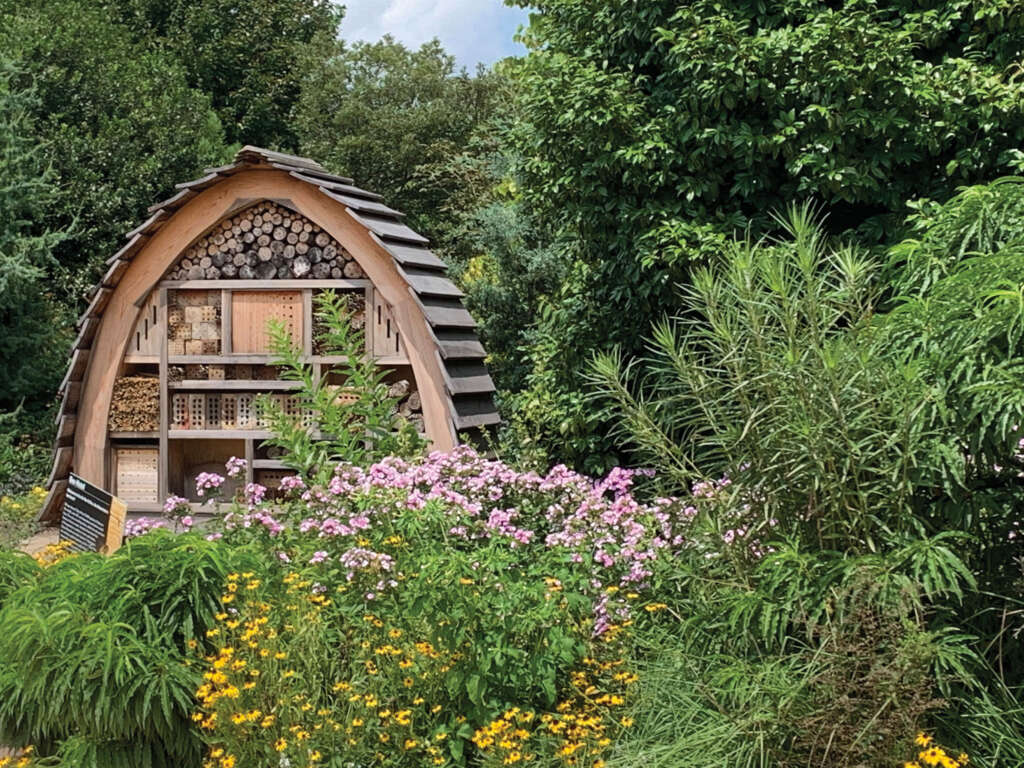
The Bee Hotel for pollenators at JC Raulston Arboretum.

JC Raulston Arboretum’s Vision for the Future

Over the years, JCRA has expanded its scope, growing from its original 8 acres to 10.5 acres, providing more space to grow, trial, and share plants. And while it still seeks out plants from around the world for Southeast growing conditions, and gives away plants to nurseries and its members, it’s what leaves the garden in terms of passion and knowledge that is setting the arboretum’s course for the future.

“Many public gardens have great plant collections, but their focus is inward, creating and showcasing lovely gardens,” explains Mark Weathington, director of JC Raulston Arboretum. “Our focus is outward, to help people and the plant industry.” The arboretum’s educational programs provide hands-on learning for children and adults alike, from lectures to symposia, and visitors can always ask questions of the knowledgeable horticulturists who staff the garden.

As Weathington points out, the places where people garden have changed significantly since J.C. first came to Raleigh. “The JCRA focus for the future will address these changing places where people garden, and the types of plants suitable for these locations.”

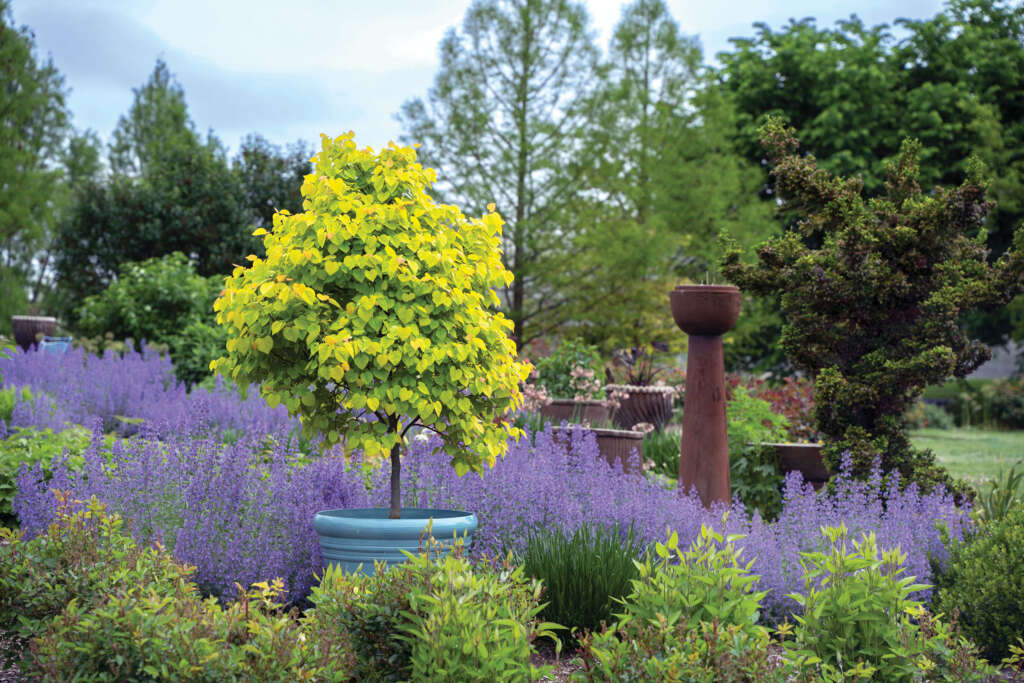
Redbud (Cercis) inside the garden.

In the 1970s, North Carolina’s population was predominantly rural or suburban, with expansive lawns. Today, urban gardening is on the rise, and people are gardening in smaller spaces. “Having a diversity of plants and sustainability is still a driving focus in gardens, but we have to do it differently in urban landscapes with smaller spaces,” he says. Green walls in cities, smaller gardens on reduced lot sizes, pocket gardens where there is open space, and gravel gardens in hard-to-grow areas are just a few of the opportunities. “People have to be more thoughtful now as they are planting—from rooftops to the concrete edges of city streets,” he sums up.

A revised biography of J.C. Raulston, Chlorophyll In His Veins: J.C. Raulston, Horticultural Ambassador by Bobby J. Ward (UNC Press), was released earlier this year, featuring a new foreword by plantsman Tony Avent and an afterword by JCRA director Mark Weathington.

JC Raulston Arboretum is open year-round at 4415 Beryl Road in Raleigh. For more information, visit jcra.ncsu.edu.

© 2008-2025 5 West magazine, LLC. All rights reserved. Copyright applies to all pages on this website. | Privacy Policy

Subscribe to
our Magazines

Subscribe to
our Newsletter