
Story by Kyle Marie McMahon
Photos by Jessica Bratton
The transition to an empty nest is often framed as a period of loss—the loss of noise, the loss of frantic schedules, and, most commonly, the loss of square footage. But for Shane and Kerri Page, standing at the threshold of a new phase as their daughter, Zoe, prepared for college, the move from a beloved suburban house to a city-centered home wasn’t about losing anything. It was about a radical, joyful reclamation of space.
In the world of interior design, we often talk about downsizing with a sense of clinical pragmatism. We focus on what fits and what has to go. But for the Pages, the goal wasn’t just to fit their lives into a smaller footprint; it was to redefine what “home” actually meant for two people entering a season of independence and refined tastes. They didn’t need more rooms; they needed more meaning.
To translate this vision into reality, the couple partnered with Joey Napierkowski of Joseph William Interiors. Known for his ability to blend urban sophistication with a warmth that feels entirely livable, Napierkowski understood that this project wasn’t just about decor—it was about lifestyle architecture. Together, they set out to prove that when you think outside the traditional box, a smaller home can actually feel expansive.
The Death of the Formal Room
One of the most persistent “boxes” in home design is the formal dining room. It is a space often held in a sort of architectural purgatory—dressed up in fine linens and expensive mahogany, yet touched only three or four times a year during major holidays. For the Pages, this was the first tradition to go.
“We didn’t need all that square footage anymore,” Kerri explains. “What we did need was a home that feels intimate, easy, and inspiring.”
With Napierkowski’s guidance, the space originally earmarked for a dining table was completely reborn as a cocktail lounge. By stripping away the expectation of a table and chairs, they unlocked a room that became the ultimate grown-up sanctuary. The heart of the room is now a conversation circle, anchored by a round wood coffee table and framed by four deep navy chairs.
The aesthetic is moody, layered, and unashamedly social. Warm ambient lighting casts a glow over rich textures, making the space feel like a private club nestled within the city. It’s an extension of the living room, but with its own distinct, elevated energy. “It’s become a signature move of mine,” Napierkowski says. “Instead of a table that gets used a handful [of times] throughout the year, you have a room that gets used from morning through night.”
For Shane and Kerri, this unexpected use of space has changed their daily rhythm. “It’s cozy and social—a place where we start the day with coffee and end it with a cocktail,” Kerri says. By removing the “formal” label, they gained a room that truly earns its keep.

The Versatile Anchor: A Nook with Ambition
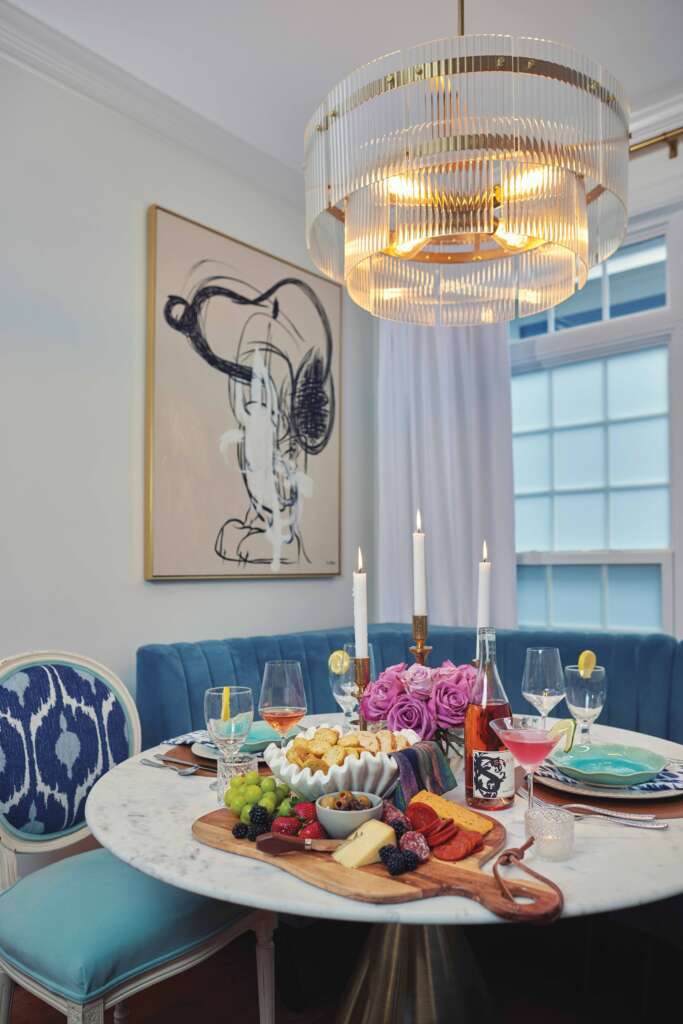
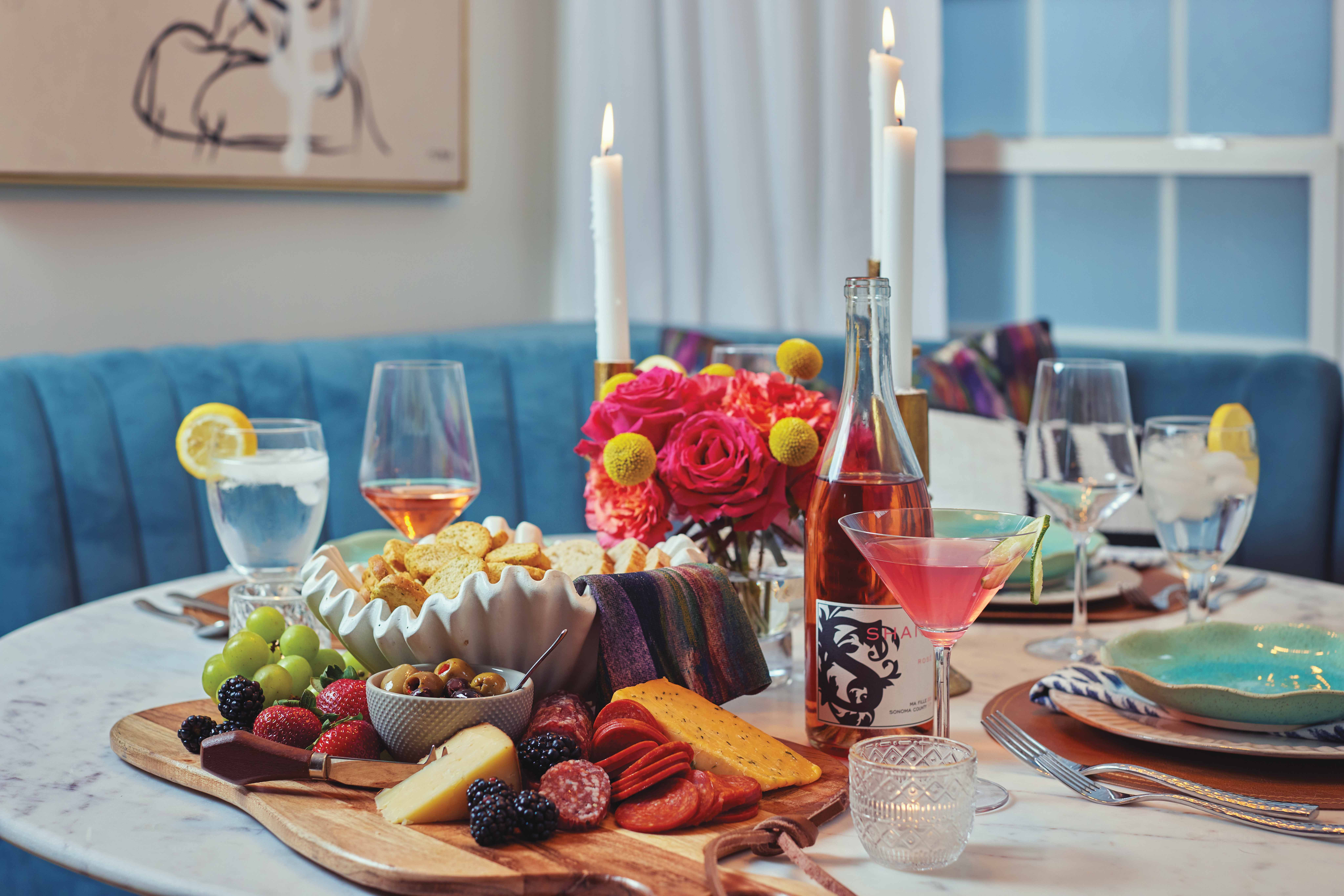
Of course, choosing a lounge over a dining room presented a logistical challenge: Where does one actually eat? This led to the home’s most impressive transformation—the elevation of the humble breakfast nook into the family’s primary dining destination. Located in a bright corner just off the kitchen, this space had to work harder than any other in the house. It needed to handle a quick Tuesday morning espresso just as easily as a multicourse Saturday night dinner with friends.
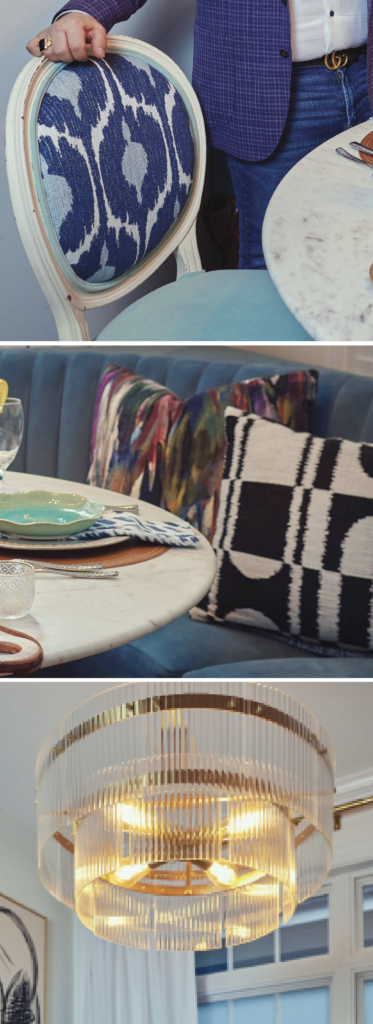
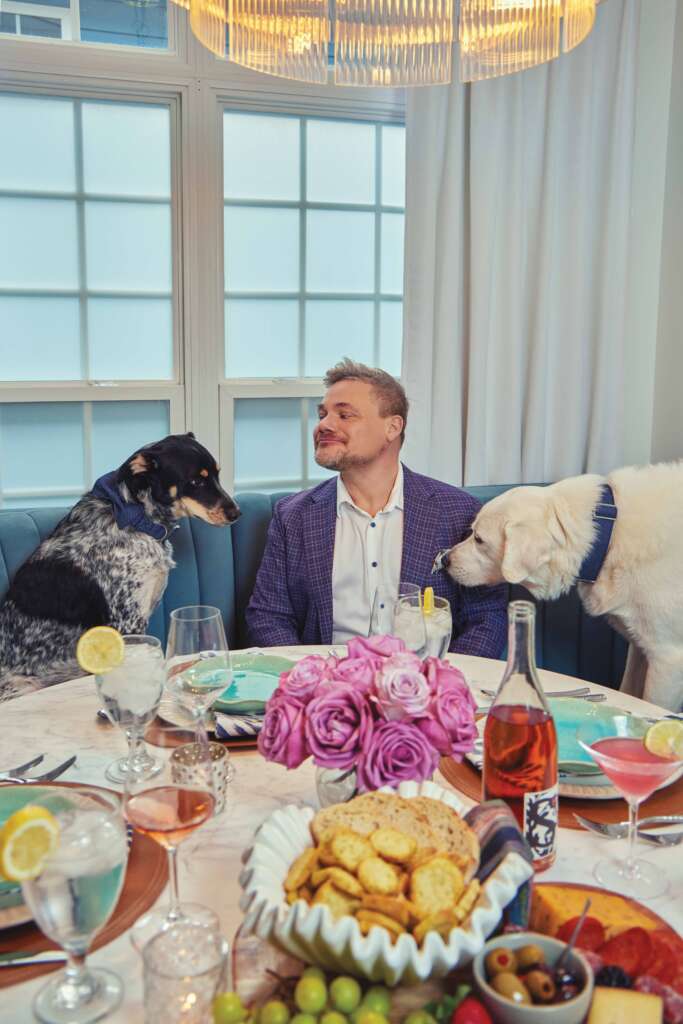
Napierkowski chose a curved, ocean blue velvet banquette that hugs the architecture of the corner, paired with a sleek white marble dining table. The juxtaposition of the soft, luxurious velvet against the cool, crisp marble creates a balance that feels both contemporary and timeless. Hanging above is a round glass chandelier that acts as the room’s jewelry; its shimmer casts elegant, shifting shadows that dance across the ceiling as the sun sets over the city.
The result is a space that feels curated rather than cramped. “It feels like the best table in our favorite neighborhood restaurant,” Kerri remarks. “Whether it’s takeout, brunch, or just a quiet night in, this is where we end up.”
This is the beauty of intentional design: When you lean into the specific ways you live—rather than how a floor plan tells you to live—even a corner can become a masterpiece.
A New Narrative for a New Chapter
As the project neared completion, the house began to reflect the Pages’ new reality. The move to the city allowed them to be more connected to the local energy, but the interior design ensured they remained connected to each other.
Even the four-legged members of the family, Moose and Ozzy, have found their places. The two dogs have happily staked out cozy corners in both the lounge and the breakfast nook, proving that sophisticated design doesn’t have to be precious—
it just has to be thoughtful.
“The house turned out gorgeous with Joey’s help,” Kerri says. “Every space earns its keep. It’s not about more rooms—it’s about more meaning.”
With Zoe now heading off to college, the home stands ready as a sanctuary for her return and a sophisticated retreat for her parents. It is a house that breathes with them—calm when it’s just the two of them, but full of potential when the doors are thrown open for guests.
Thinking Outside the Traditional Footprint
The story of the Page home is a lesson for anyone looking to refresh their space this year. It challenges the idea that downsizing is a series of compromises. Instead, it frames the process as a series of opportunities.
If you find yourself with an underused room, why not turn it into a library, a creative studio, or a lounge? If you have a corner with a view, why not make it your primary dining spot? Outside-the-box design is simply the act of giving yourself permission to ignore the labels on a blueprint.
“It’s the kind of house that brings people together,” Kerri says. “Whether Zoe’s home for the weekend or it’s just the two of us, it always feels special.”
The Pages didn’t just move into a city house; they moved into a home with heart, purpose, and a very bright future. It’s a design story where life itself—in all its changing, evolving glory—was the primary inspiration.
How to Zone a Small Space
When you move into a smaller footprint, the biggest challenge isn’t necessarily the lack of square footage—it’s the lack of walls. Without traditional rooms to define where one activity ends and another begins, a home can quickly feel cluttered or chaotic. The secret lies in visual zoning: using design cues to create “rooms” within an open floor plan. Here is how to create distinct areas that feel intentional and organized:
- Anchor With Rugs: Think of an area rug as the foundation for a room. By placing a rug under the conversation circle in your lounge or beneath the dining table, you create a physical boundary that tells the eye, “This is a separate space.”
- Vary Your Lighting: Don’t rely on a single overhead source. Use different types of fixtures to define zones. A low-hanging chandelier over a breakfast nook creates an intimate envelope for dining, while floor lamps or wall sconces in a seating area establish a mood for relaxation.
- Use High-Contrast Textures: You can define a zone by changing the tactile feel of a space. In a small home, a velvet banquette creates a plush, stationary anchor for a dining area, contrasting against the more open, airy feel of leather or wooden chairs in an adjacent living zone.
- Think Vertically: When floor space is at a premium, use your walls to signal a change in purpose. A gallery wall or a bold piece of art can act as the backdrop for a home office nook, distinguishing it from the rest of the room without the need for a bulky room divider.
- The Power of Round Furniture: As seen in the Page home, round tables and curved seating encourage flow. They soften the hard lines of a small room and make it easier to navigate between zones without bumping into sharp corners.
It’s a Dog’s Life
Sophisticated design and dog ownership are not mutually exclusive. Here are some ways you can create a curated sanctuary where everyone—including our four-legged friends—feels perfectly at ease.
- Prioritize Performance Fabrics: High-quality performance velvet, like the ocean blue banquette in the Page home, is resilient because it lacks a looped weave for claws to snag.
- Opt for Smart Navigation: Choosing furniture that encourages flow, such as round tables and open seating, makes it easier for both humans and pets to navigate without bumping into sharp corners.
- Create Visual Zones: Using area rugs to anchor a conversation circle or a dining spot provides a landing pad for pets while physically defining rooms in an open floor plan.
- Focus on Purposeful Meaning: By ignoring traditional blueprint labels and designing for your actual life, you ensure that every space earns its keep for every member of the family.