

From Home Cooking to High-End Plates
Story by Dathan Kazsuk | Photos by Jessica Bratton
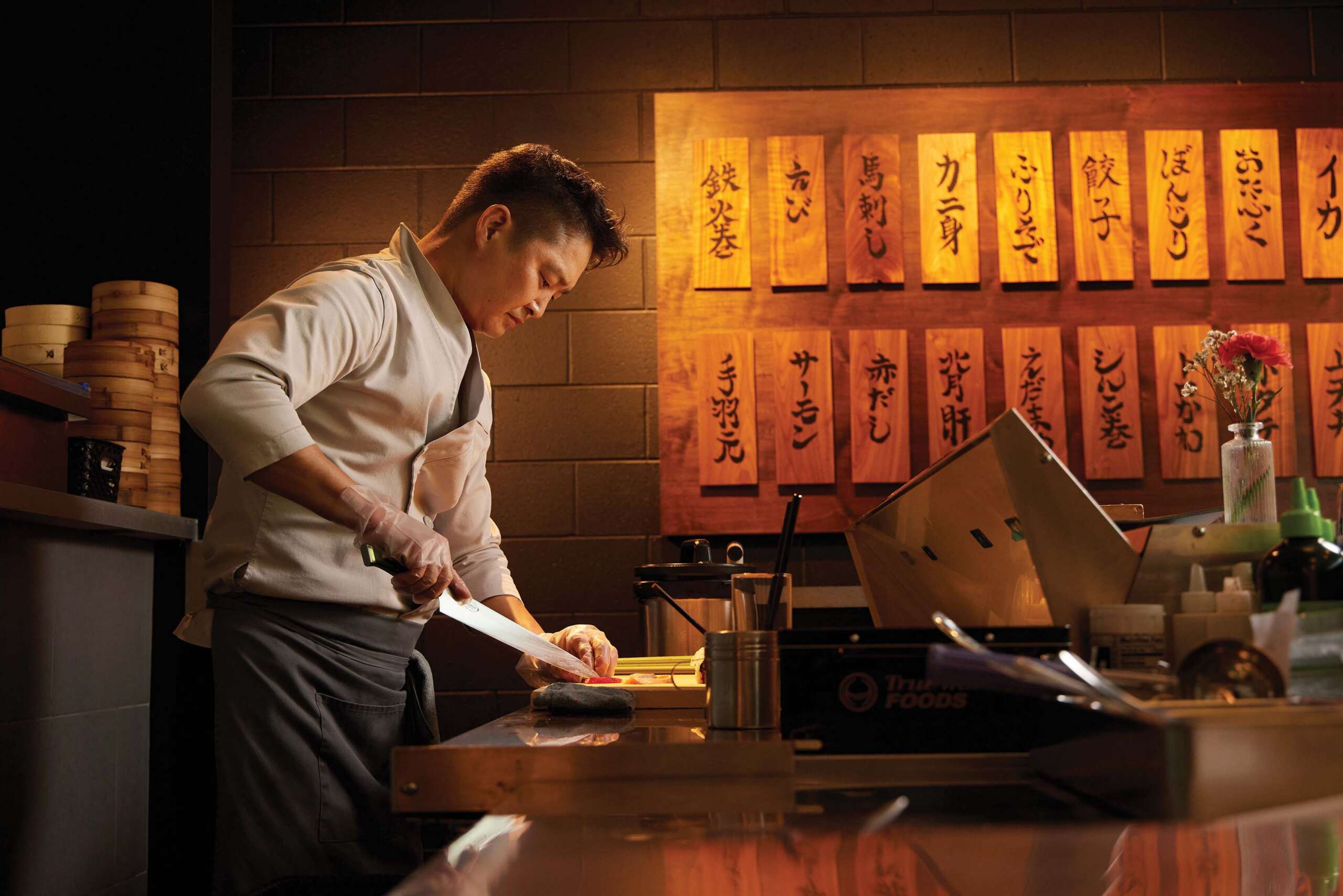
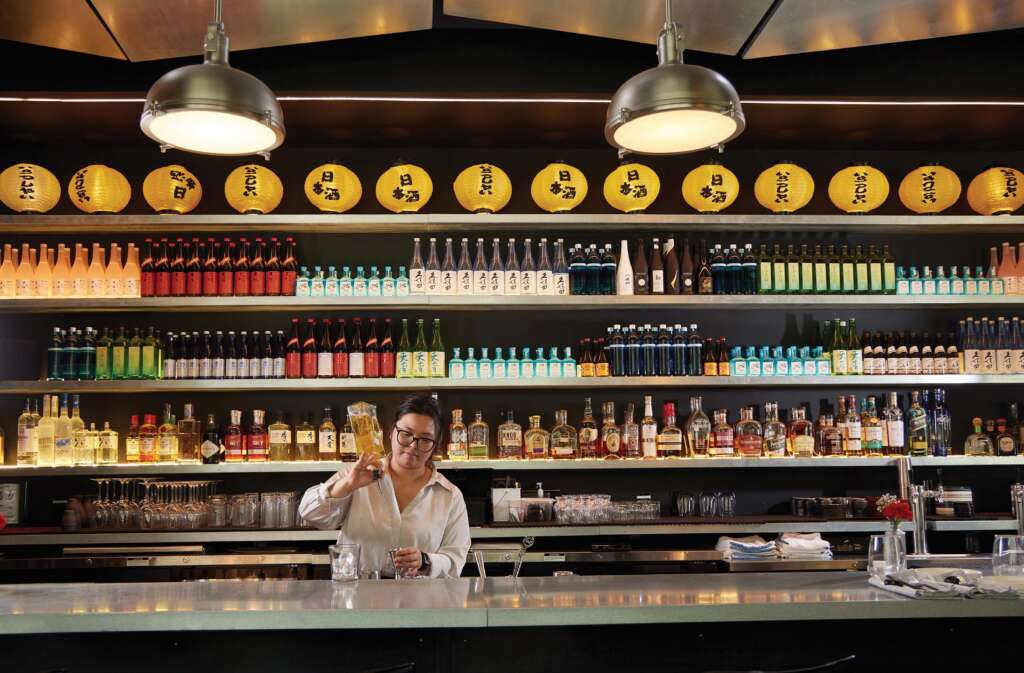
I ‘d barely gotten settled inside M Izakaya with a Wasabi Martini before Chef Michael Lee was talking about childhood, obligation, and food—not as romance, trend, or some polished chef-origin myth, but as survival.
Long before M Sushi became one of the Triangle’s most talked-about restaurants, and before Durham became the center of his growing M Restaurants world, Lee was a 10-year-old kid who came to the United States from Korea with his family in the mid-1980s. His parents brought him and his older brother here for “better education” and “more opportunity,” but that opportunity came with long factory hours and parents who were out the door before the boys woke up and not home again until evening.
“We were essentially responsible for feeding ourselves since we were 10 and 12,” Lee says. “We didn’t see our parents when we woke up in the morning. We walked to school, and then when we got back home, we didn’t have our parents back yet. So you had to eat some way, somewhere.” That’s where the story really starts. Not in a gleaming sushi bar. Not in a chef’s coat. Not with a dramatic first bite of pristine fish under flattering low light. It starts with two boys opening cupboards, digging through the refrigerator, tossing whatever looks promising into a wok or a frying pan, hoping whatever emerges can be eaten over rice.
Lee laughs as he tells me about nearly blowing up a microwave—a device that felt foreign to him after growing up in Korea. “There were a lot of learning experiences,” he says.
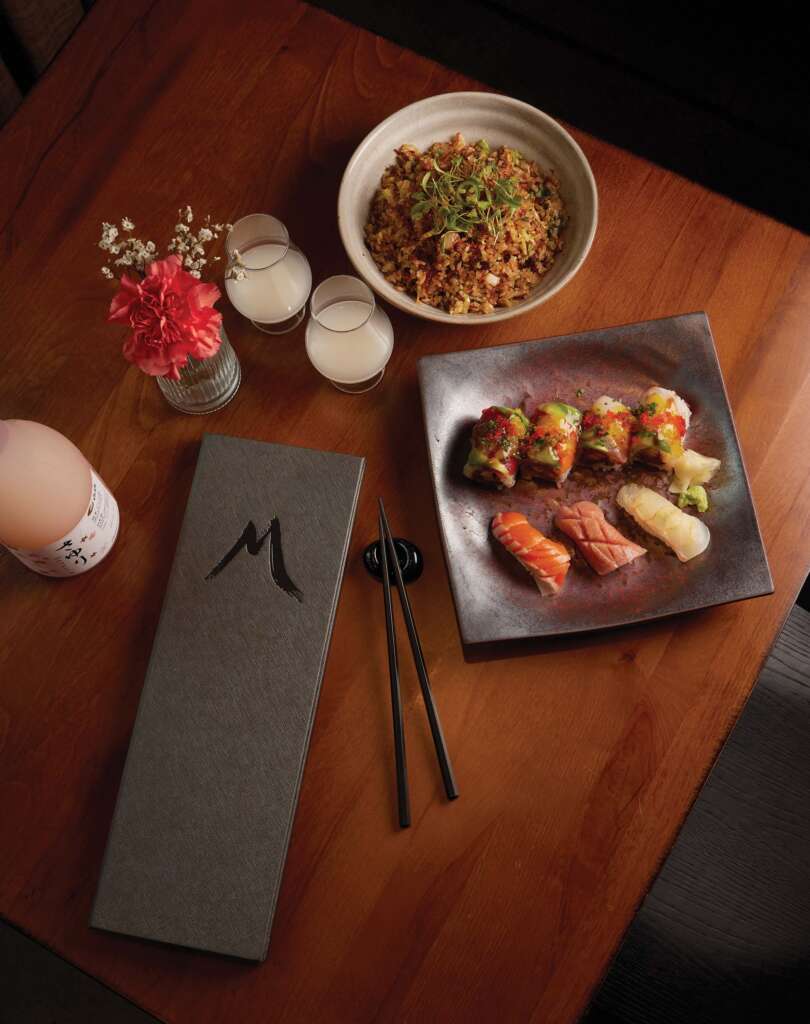
But one memory has stayed with him all these years, and it sounds almost too perfect for a chef whose career would later be built on instinct, repetition, and experimentation. “I was trying to create a chicken stock, but I accidentally made a chicken noodle soup,” he says. “I ended up throwing in vegetables and then noodles at the end, just to be able to make it a meal.”
Later, when he saw Campbell’s chicken noodle soup, he had a moment of culinary validation. “I didn’t know that was a thing until I was in junior high,” he says. “I was like, hey, this tastes exactly like this.”
That memory matters, because Lee is stubbornly resistant to the kind of mythology people like to attach to chefs once they become successful. He doesn’t present himself as someone born with a magical palate or supernatural relationship to ingredients.
“I never really had, like, a special gift in cooking,” he says. “It was just more like a necessity when we were young.” Even now, he’s still learning from the people around him. That humility may be one reason the M empire has grown the way it has.
Humble Beginnings
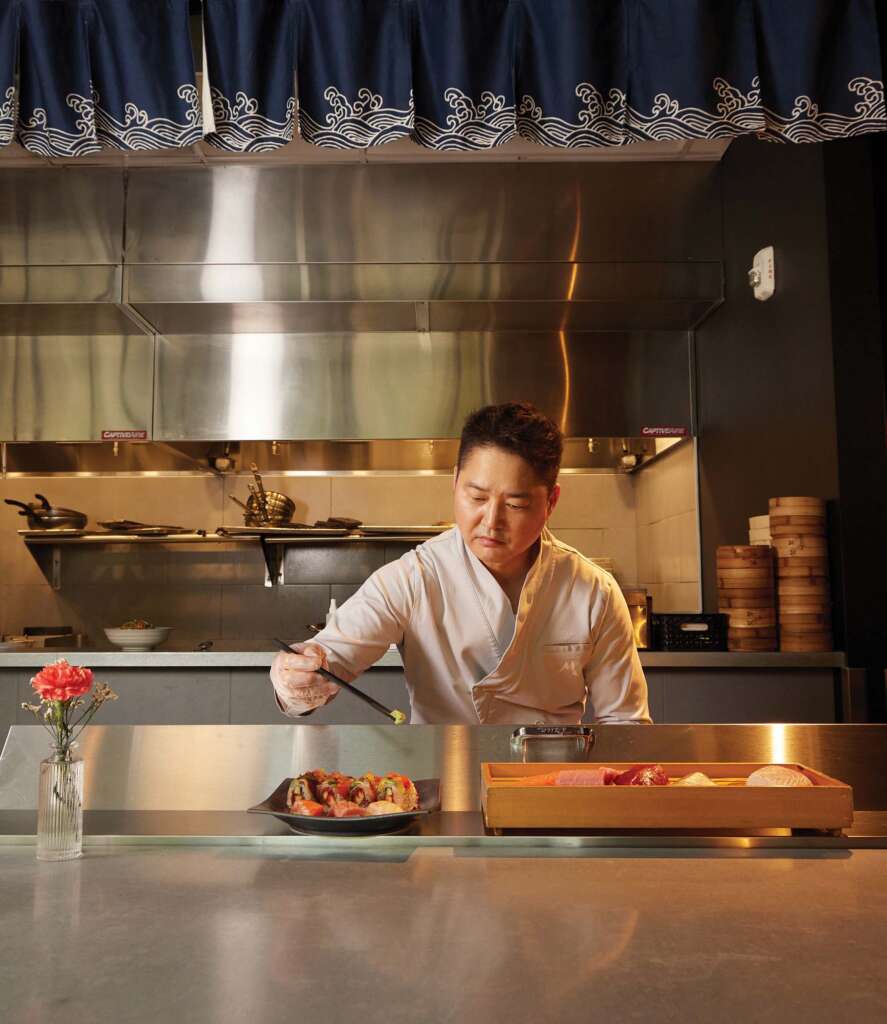
Lee’s portfolio now spans four Durham restaurants—M Sushi, M Kokko, M Tempura, and M Pocha—along with M Sushi and M Izakaya in Cary, and a new Korean concept coming soon to Durham. But his story is less about ambition for ambition’s sake and more about curiosity, restlessness, and an ongoing desire to build the kinds of places he feels are missing.
His Durham success, for one, was never some neat, polished master plan.
After selling his first restaurant, Sono Sushi, Lee and his wife, Kim, spent about a year and a half looking for the right place to start over.
“We looked at Chapel Hill quite a bit,” he says. “Durham, I didn’t know too much about. But I did have an immense respect for Durham.” What happened next came down to timing, people, and chance.
The space that became the original M Sushi didn’t exactly inspire confidence at first. The building was an old bicycle shop, dusty and run-down—the kind of place where it takes a particular type of imagination to see what might be possible.
Lee couldn’t see the potential. But his wife did. So did the landlord and design team. His role, at least in his telling, was simpler. “I was just like, if you guys say so, I’ll make the food.”
That leap of faith set things in motion. When M Sushi opened in 2016, he and Kim were all in.
“We literally maxed out every single credit card we had, and then all the cash we had,” Lee says. There was no safety net, no quiet backup strategy waiting in the wings. “If it doesn’t [work out] for any reason,” he remembers telling his wife, “I’ll work at two restaurants and support whatever it takes.”
No Shortcuts
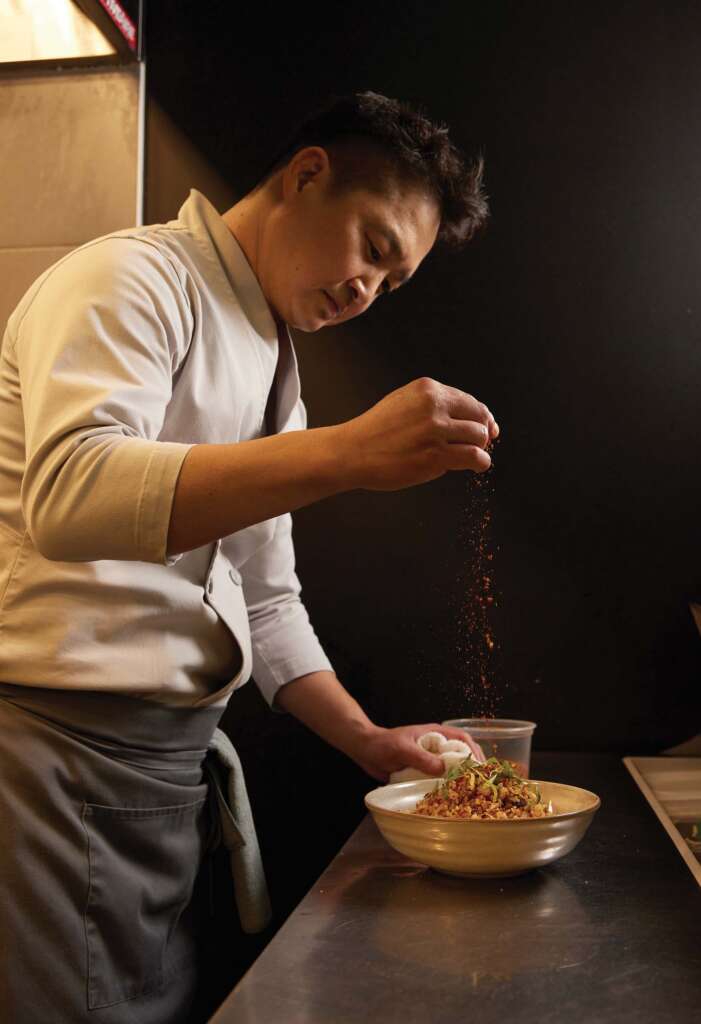
In the beginning, Lee drove to RDU at 6 a.m. to pick up shipments of specialty fish, because the kind of seafood he wanted wasn’t available here. At the time, he says, too many sushi restaurants in the area were relying on the same generic product.
He began sourcing from a New Jersey vendor and paying freight on fish that many New York restaurants were buying for less than he was paying in North Carolina. It wasn’t a sustainable model—at least not on paper—but it helped establish the standard he wanted.
And yet, for all the attention his restaurants receive for fish, Lee keeps circling back to something more humble: rice.
One of the most meaningful lessons of his career came not from some grand, glamorous kitchen, but from a small family-run sushi restaurant in Tucson, Arizona. The ingredients were humble, but the sushi was excellent, and the thing that stayed with him wasn’t some rare cut of fish. It was the rice. That attention to detail has been hard-earned. Lee dropped out of college in 1998 and spent years moving around the country, working in restaurants and learning what he could.
“In the span of like 10 years, I was working at almost like 18 restaurants,” he says. “I was living out of my car, for most of the time, and then I would get a 24-hour gym membership and sleep in the car, take a shower, sleep in the car.” He saved almost everything he made. He skipped nights out. Instead, he played video games—“World of Warcraft, Warcraft, StarCraft”—because they kept him occupied and away from spending money.
The Backbone
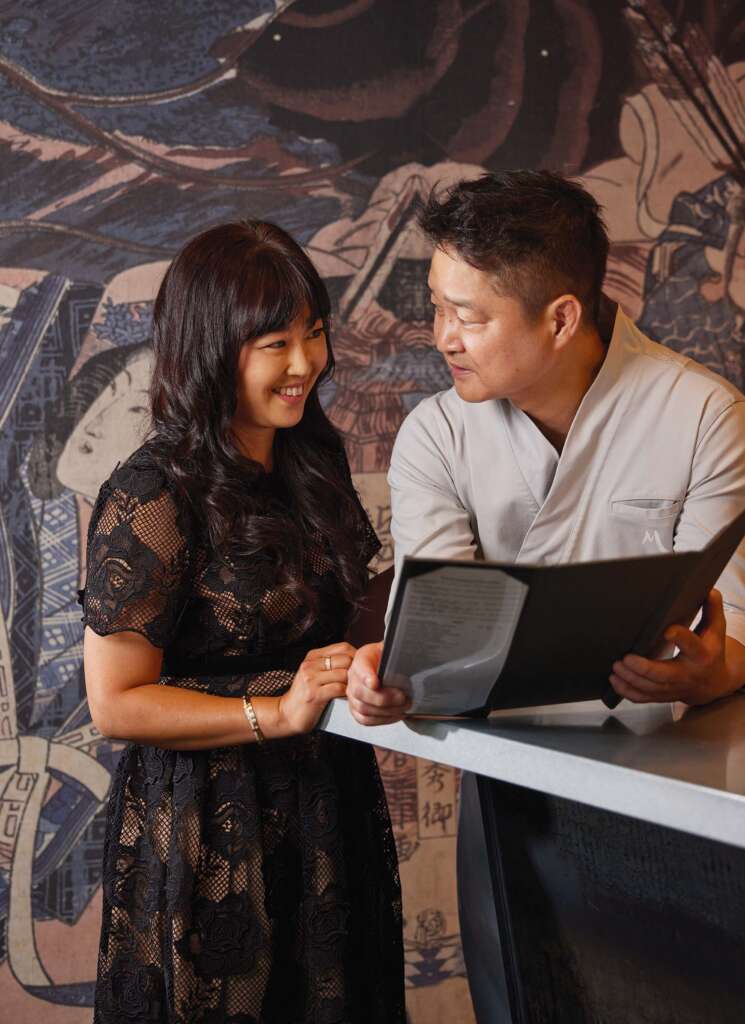
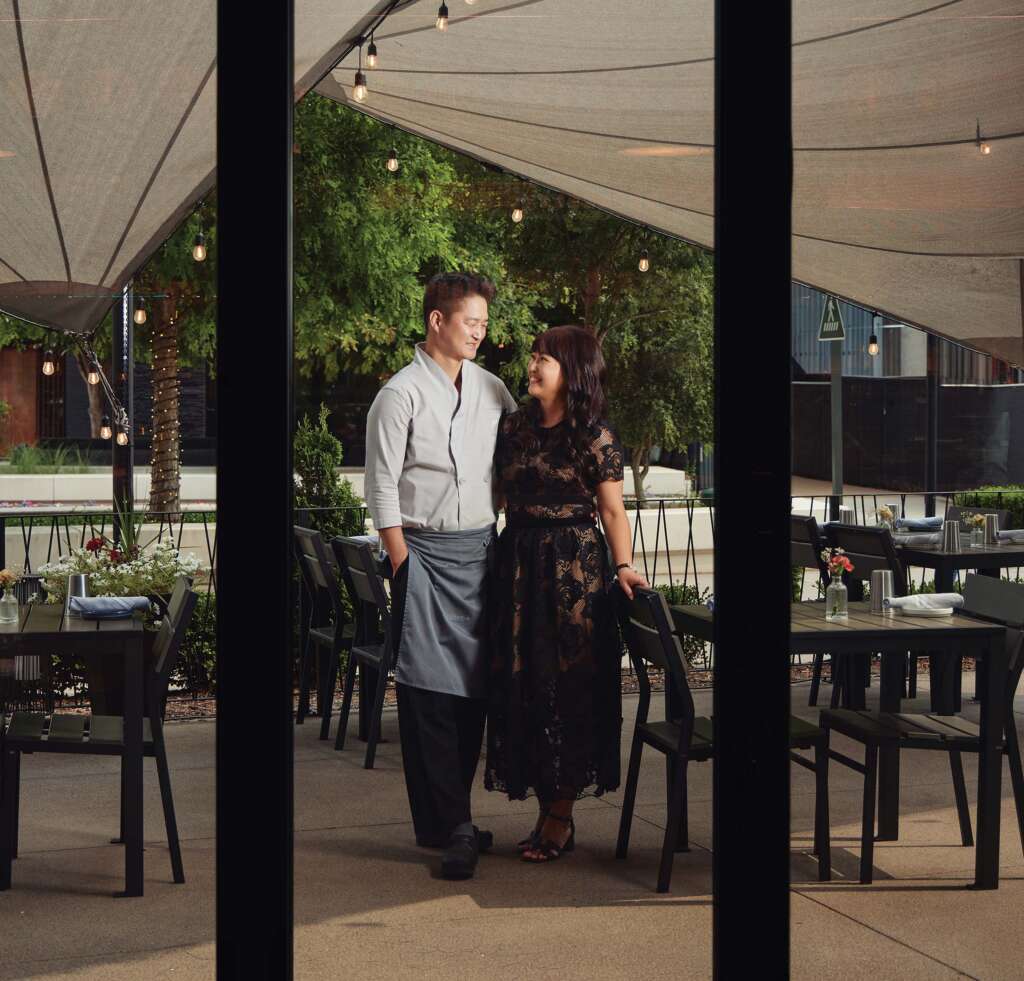
And then there is Kim.
The more Lee speaks, the clearer it becomes that she is more than a background figure in the story. She is fundamental to it. In the early years, he says, they were at the restaurant every day, where their children learned the business alongside them. Their daughter, he tells me, was tiny then, growing up in the office and dry storage while the restaurant was taking shape around them.
Lee does not hedge when I ask how much of his success is tied to Kim. “I can comfortably 100% say that I would not have made it this far and where I am without her,” he says. “People underestimate so many individuals, or chefs, or restaurateurs, or businessmen—the people that you don’t see maybe in the background, what such an important role they play.”
That’s even more true now, as he turns toward Korean food and the flavors he grew up on.
The goal is respect first, interpretation second. He’s more careful here than anywhere else. No watered-down versions. No sanding off the edges that make it real.
“When you eat it and see it, you know it’s Korean,” he says. “But how it is prepared and how it is presented is going to be a little more unique.” He also knows whose opinion matters most when he is working through those dishes. “As long as my wife sincerely likes it,” he says, “that’s good enough.”
That was the thought I kept returning to before dinner in Cary. Not the expansion. Not the accolades. Not even the discipline it takes to keep so many restaurants moving at once. It was the image of a kid and his brother trying to feed themselves because they had to. The accidental soup. The near–microwave explosion. The guy who still insists he is learning. The husband who keeps returning, again and again, to the woman who saw possibility in a dusty old bicycle shop when he could not yet see it himself.
Many chefs can tell you where they trained. Many restaurateurs can tell you when they expanded. Michael Lee can tell you that, too. But the deeper story is about family, risk, trust, and the people who help build something before anyone else can picture it.
Sometimes the beginning of a restaurant empire isn’t a grand opening. Sometimes it’s two boys in a kitchen, trying to make dinner work.
For more information, visit M Restaurants at m-restaurants.com.