

| By Usha Sankar |
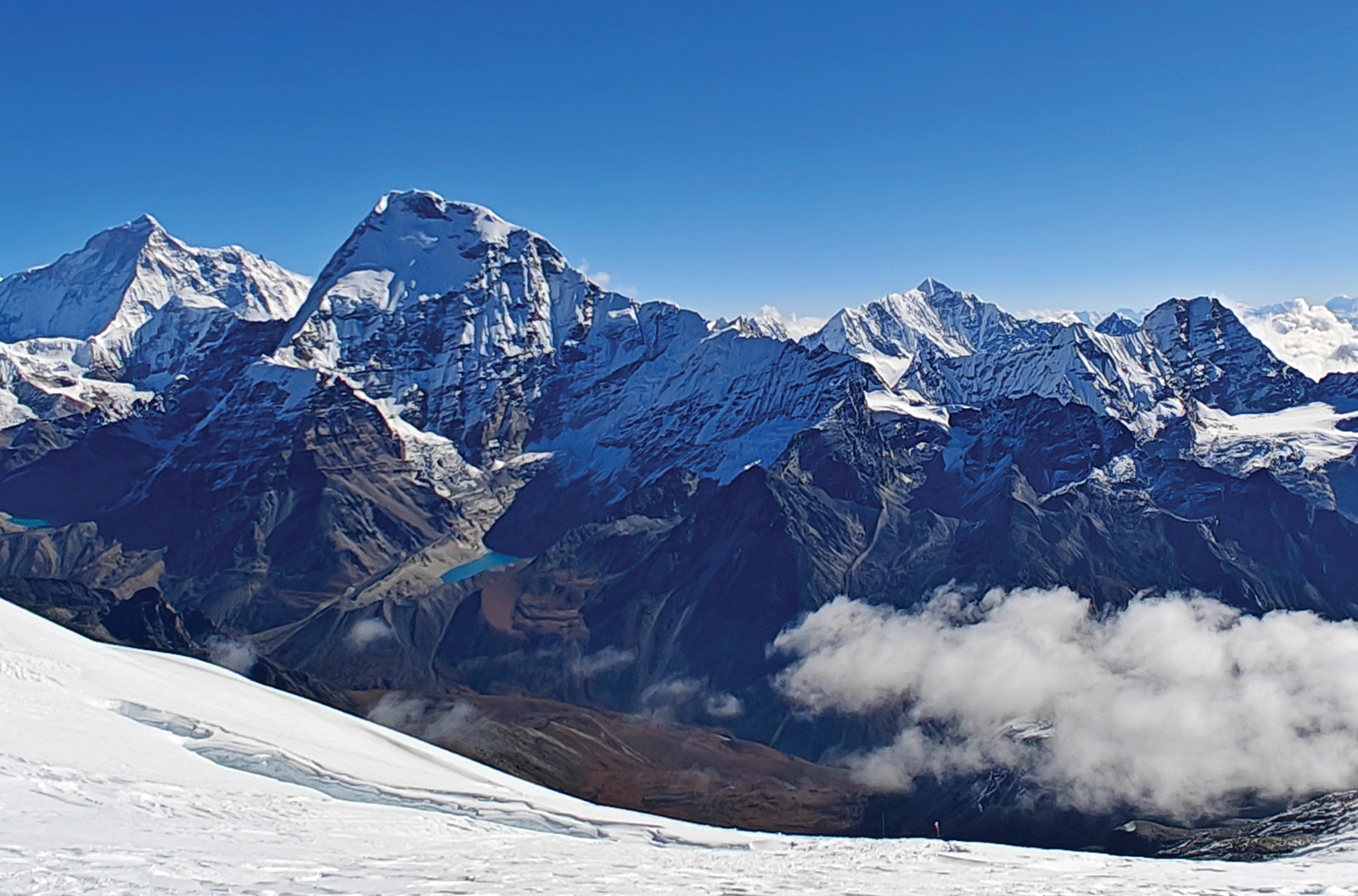
In late April, 28 mostly amateur hikers—including 14 women—embarked on the trek of a lifetime to Everest Base Camp (EBC) under the banner of the Carolina Yak Pack. Standing at 5,364 meters, many collapsed in tears upon arrival, overcome by the sheer enormity of their achievement. But behind each pair of boots on the trail lay a personal story of grit, faith, and sometimes sheer chutzpah.
The idea of the hike arose casually in a yoga group founded by Morrisville-based IT consultant Prakash Punj. For some, like chemical engineer Alka Sinha, the invitation struck a deep chord. After 22 years in Michigan, her move to North Carolina in 2022 had already set her on a new path. She saw the trek as a spiritual test. “My head felt cold and I felt giddy,” Sinha recalls of her struggle climbing Gokyo Ri, a steep peak hikers ascend to acclimatize. “I passed out for five to six minutes and when I came to, I said, ‘Hey, I was sitting on a rock.’ My guide gently corrected me, ‘You fell.’” Even so, she continued on.
The team quickly bonded over their physical and emotional challenges. Raleigh-based paralegal and mother of two Anusuya Agarwal wasn’t sure what she was signing up for. “[Everest] was never on my bucket list,” she says. But after being laid off in January, she seized the moment. The trek’s highest point, the Cho La pass, proved to be her crucible. “It had snowed the night before. When I crossed, I was sobbing … I couldn’t believe what I had achieved.”
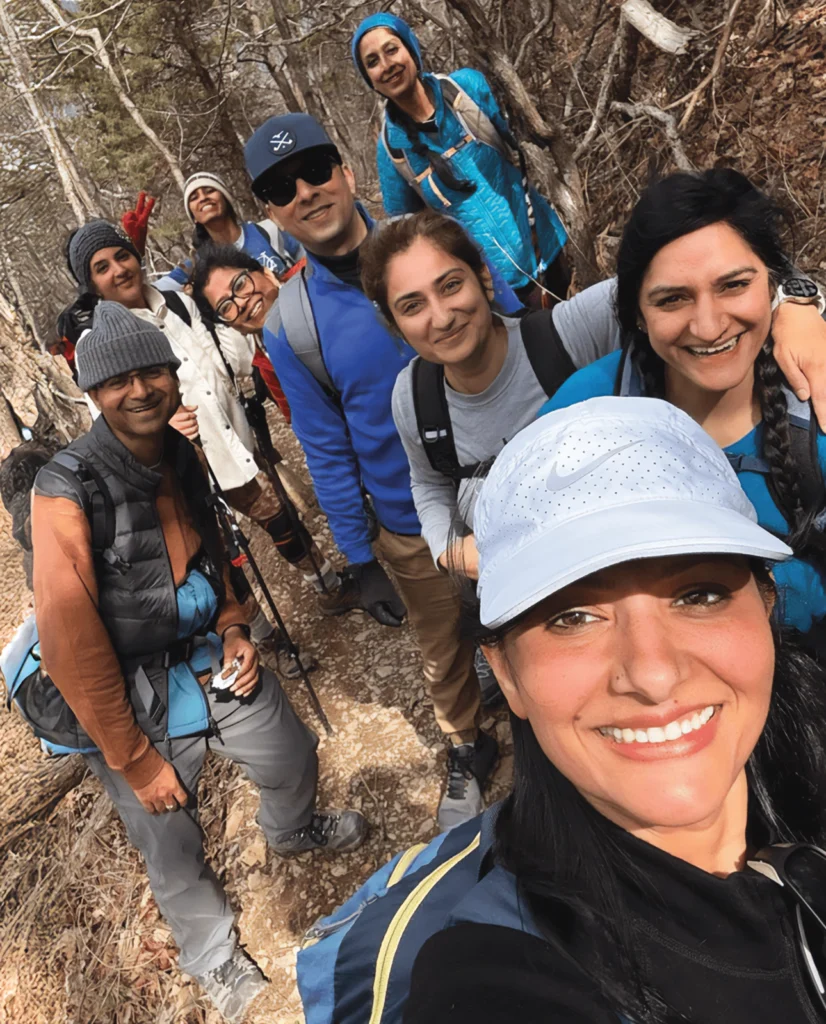
For some, the journey began with a calling. Shelly Arora, a Canada-based order management specialist originally from Faridabad, India, had recently lost her mother. When her husband spotted a social media post about the trek, she took it as a sign. “The hike started on April 20—my 50th birthday,” she says. When the cost gave her pause, her son stepped in and offered to help fund the trip. Despite severe chest congestion and nosebleeds on days seven and eight, she insisted on continuing on foot, even as her sherpa suggested flying ahead. “I persevered,” she says. “I was even ahead of a few of the others.”
That determination was echoed by others on the trail. “It is always the mind telling the body something can’t be done,” says Monika Gupta, a finance professional turned stay-at-home mom who’d never traveled solo. Despite a “sheltered life,” she found inner strength she didn’t know she had.
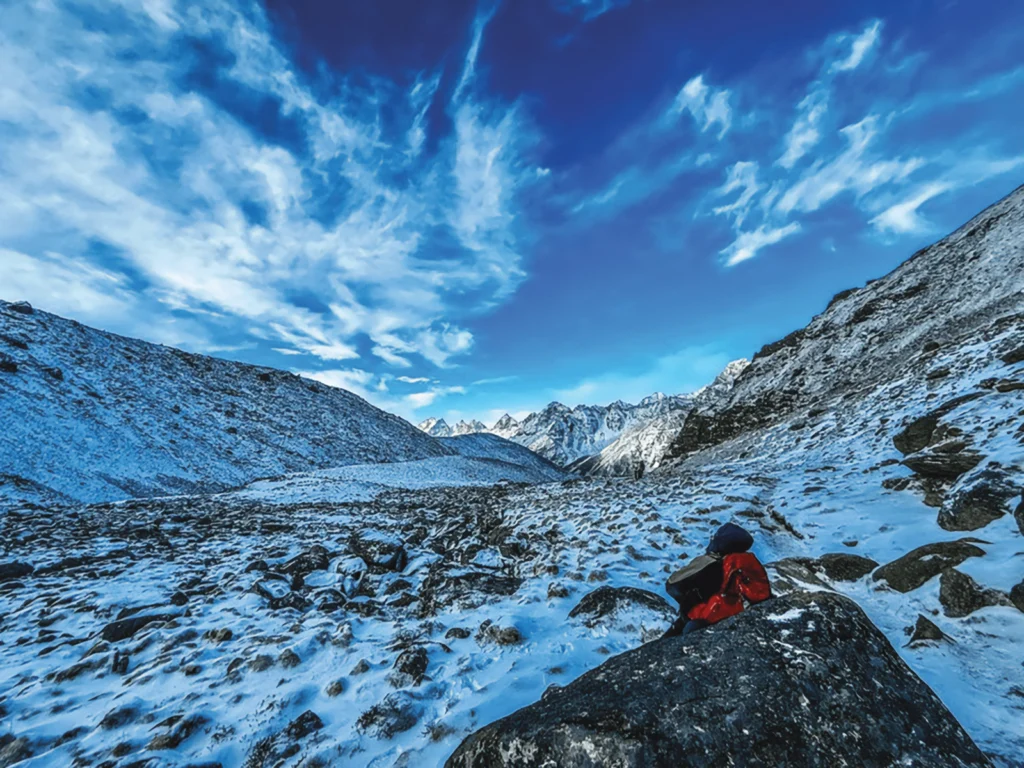
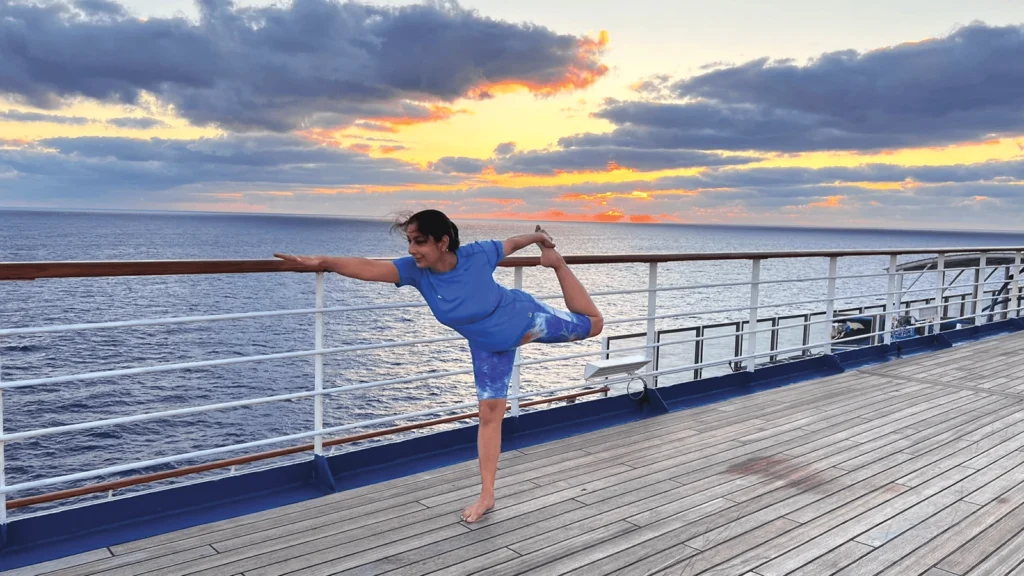
Vani Sistla, a Duke University Hospital employee who’d never hiked before January, echoed that sentiment. Raised in Mumbai, she credits prayer—and her Bollywood playlist—for carrying her through the climb. “There were many times I thought of withdrawing. But my dad pushed me,” she says. “I feel like the mountains have given me a little of themselves. I feel so much more alive. I feel unstoppable.”
While each woman had her own reason for joining, the trek created a sense of shared purpose. When Sinha fainted, it shook the group. “I was 80% of the way up to Gokyo Ri when I felt I wanted to go back,” says web designer and educationist Gurleen Bajaj. “I was in tears and wondered what I had signed up for.” But reaching base camp offered what she called a “next-level” sense of achievement—and an unexpected social media detox.
For some, the trek wasn’t just about personal milestones—it was a catalyst for family change. Monica Anand, a Duke University researcher, signed up in part to help improve her husband’s health. “Mukesh was not active, and his health was deteriorating,” she explains. They trained together, but after injuring his knee, he was advised not to go. Monica nearly canceled, but when family and staff stepped in to help at home and their restaurant, Nukkad, she pushed forward. “I did the hike for Mukki,” she says. “Now our fitness journey is off to a jump start.”
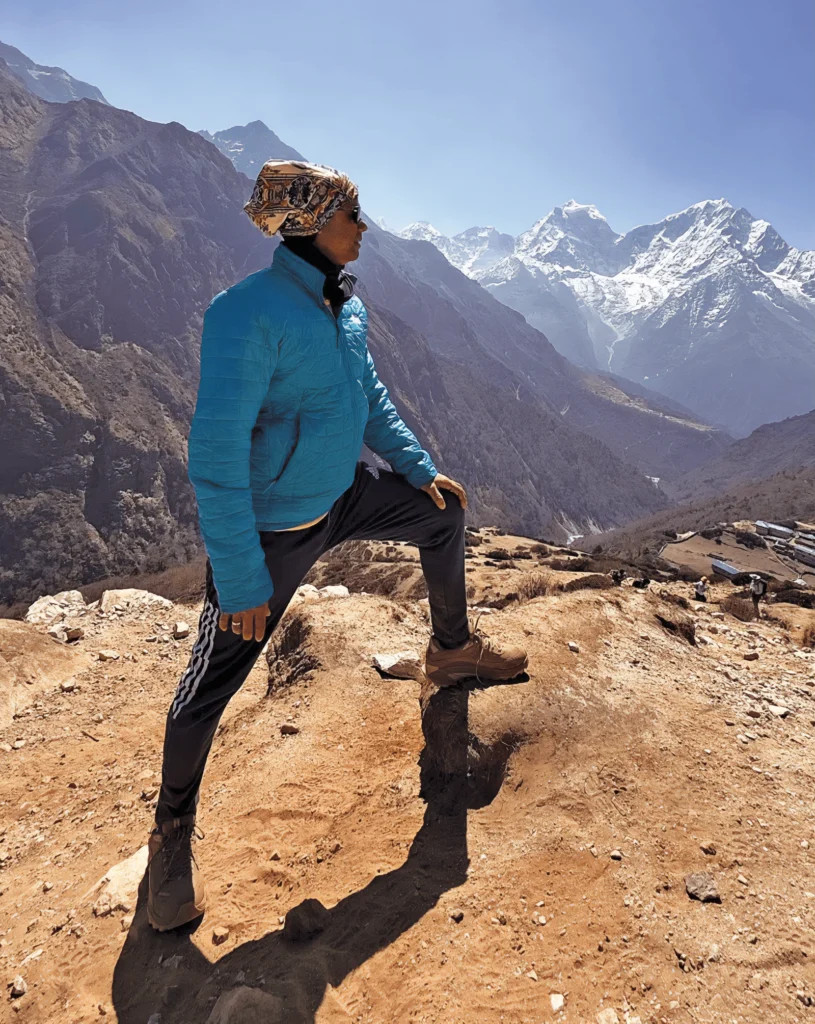
Rashmi Batra, an IT program manager and mother from the “Sports City of India,” Meerut, saw the trek as a long-held dream and a fitness goal. “Going to Everest was always a dream,” she says. But after falling ill with gastrointestinal issues on day one, she relied on sheer willpower to continue.
At the heart of the group was Anita Punj, a Duke Health strategic services associate. Raised in Dharamshala, a Himalayan town where walking mountain paths was part of daily life, she felt uniquely at home in the terrain. The idea for the hike came during a Grand Canyon trip with her husband, Prakash. “We just manifested our intentions,” she says. “There’s something about the mountains that heals you.” She credits her incident-free journey to years of yoga, meditation, and the energy of the group.
While the hikers carried emotional weight with them up the mountain, they also brought gifts. Before leaving, the Carolina Yak Pack raised close to $4,000 to support a local school in Nepal’s Solukhumbu region, funding a new playground. They donated laptops, shoes, and musical instruments. And moved by the aspirations of their young porters and guides, they shared their stories on Facebook and launched a GoFundMe campaign that raised $3,300 in a week.
The physical achievement was undeniable. But when asked what they took home from the trek, the answer was unanimous: gratitude. Gratitude for health, for resilience, for community—and for the mountains that showed them what they were made of.
Subscribe to our Talk of the Triangle newsletter.